Alex Pearlman | From “Too Many Tabs” to “Crashing Out” | The Art of the Rant
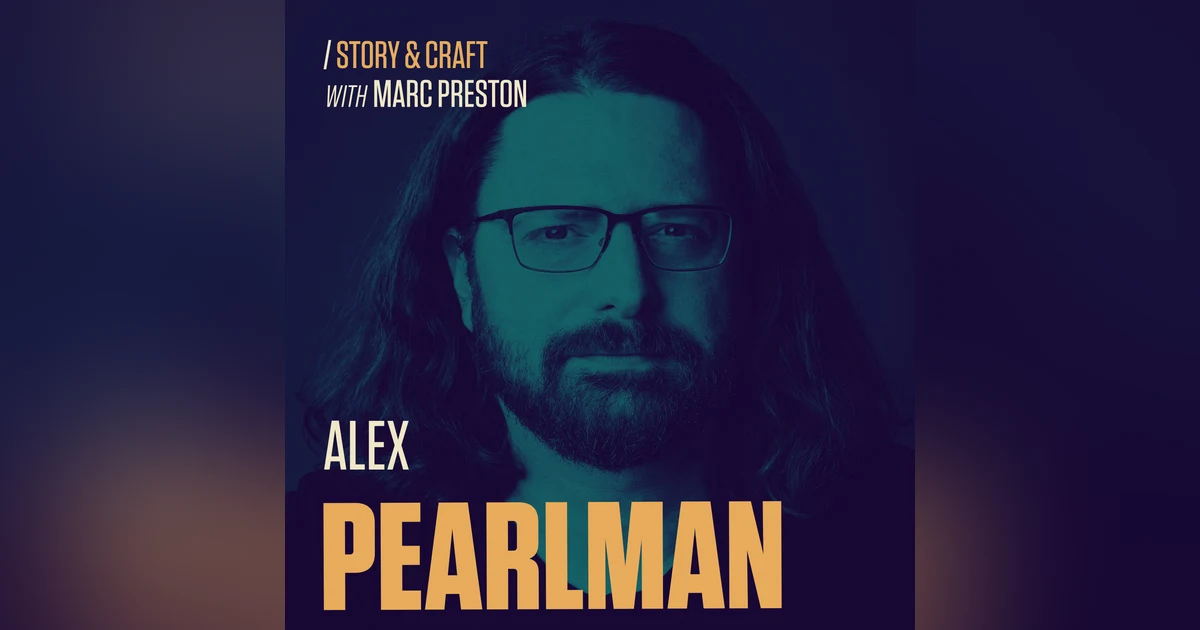

Comedian & Podcaster Alex Pearlman from “Too Many Tabs” and “Crashing Out” joins us on Story & Craft to talk about his career and personal stories.
Comedian & Podcaster Alex Pearlman from “Too Many Tabs” and YouTube’s “Crashing Out” joins us on Story & Craft to talk about his career and personal stories.
Alex shares his take on Donald Trump and Elon Musk and on how social media algorithms shape the news. Growing up, he watched the evening news at the dinner table, and 25 years of stand-up taught him to break big stories down quickly. On “Too Many Tabs,” the comedy history podcast he makes with his wife, he takes the long view, such as the 80-year fight for the 40-hour work week.
He describes the weekly podcast “Crashing Out,” which he co-hosts with Philip DeFranco, who has covered news on YouTube for 20 years. The conversation also covers the live tour that just wrapped, where he found audiences everywhere looking for hope. Alex recalls asking Bernie Sanders in his Capitol office whether anyone in Washington is thinking about the rest of the century.
SHOW HIGHLIGHTS
00:00 Alex Pearlman joins Story & Craft
04:36 Growing up watching Dan Rather and the evening news
07:08 How short videos and algorithms shape what we see
08:07 Why he calls himself a stand-up comedian, not a journalist
10:56 Comedy heroes George Carlin, Lenny Bruce and Richard Pryor
13:37 A typical day of scrolling, family time and picking what to cover
17:04 The moment his young son told him to put the phone down
25:39 Planning for his toddler’s future with trades, college and AI
32:26 “Too Many Tabs” and the long view on the 40-hour work week
33:37 Andrew Carnegie’s libraries, Elon Musk and the Gilded Age
37:51 What he learned on tour: everyone is looking for hope
39:27 Meeting Bernie Sanders in his Capitol office
45:21 If he could go back in time and fix social media
49:35 Building a healthy news diet, starting with local news
57:31 “Crashing Out” with Philip DeFranco and the tour that just wrapped
STAY IN THE KNOW
- Website: https://www.storyandcraftpod.com
FOLLOW THE SHOW
- Instagram: https://www.instagram.com/storyandcraftpod
- Facebook: https://www.facebook.com/storyandcraftpod
CONNECT WITH MARC
- Instagram: https://www.instagram.com/airpreston
- Facebook: https://www.facebook.com/marcpreston
Hosted by Simplecast, an AdsWizz company. See pcm.adswizz.com for information about our collection and use of personal data for advertising.
Don’t forget to like, subscribe and follow!
Show Site: https://www.StoryAndCraftPod.com/rate
Show Substack Page: https://storyandcraft.substack.com
Show Facebook Page: https://www.facebook.com/storyandcraftpod
Show Instagram: @StoryAndCraftPod
YouTube: https://www.youtube.com/@storyandcraft
Marc’s Facebook Page: https://www.facebook.com/marcpreston
Marc’s Instagram: @airpreston
[00:00:00] Alex Pearlman: I've always been clued into kind of what was going on. You know, Nick- Newt Gingrich just showed up recently in the news, and I had like... Uh, when I was, I think when I was 11, I knew to hate Newt Gingrich. Like I knew then. Um, I didn't know why, but I knew I had to.
[00:00:18] Announcer: Welcome to Story and Craft. Now, here's your host, Marc Preston.
[00:00:23] Marc Preston: All right, here we go. Back again, you and I, another episode of Story and Craft. Welcome back, and welcome if this is your very first episode. Thanks for stopping by. Uh, today, sitting down with comedian and podcaster Alex Pearlman. You might have seen his stuff on, uh, YouTube, Instagram, and of course his podcasts, Too Many Tabs and Crashing Out.
[00:00:46] Marc Preston: Uh, he has some really cool rants that are fun to check out. Cathartic, some might say. A really great chat. You know, we're, we're heading into the midterm elections here in the US, and, uh, he's somebody who doesn't hold back. Unique perspective. [00:01:00] I figured in celebration of the fact we have a, uh, election coming up here shortly, let's get Alex Pearlman on.
[00:01:06] Marc Preston: Uh, it was a great chat, and, uh, I think you'll enjoy it quite a bit. Hey, I would appreciate it, by the way, if you would grab your podcast app, make sure to subscribe to follow the show. Uh, that way you get notified every time a new episode rolls out. Also, if you would, just make sure to like and, uh, uh, star here and there.
[00:01:24] Marc Preston: You know, whatever you wanna do to throw a little love out there. It does help people to find the show, and I appreciate it. Thank you. And of course, the website storyandcraftpod.com. Uh, everything about the show, past guests, past episodes, it's all right there, and you can also send me a note if you would like.
[00:01:41] Marc Preston: Uh, okay, so let's go ahead and get on into it, talking some current affairs, uh, getting ready for the election, because today, it's Alex Pearlman Day right here on Story and Craft. Man, it's so nice to have somebody who has, uh, good sound
[00:01:56] Alex Pearlman: I've invested a lot into sound so I wanted to make sure we have something [00:02:00] good.
[00:02:00] Marc Preston: S- very nice.
[00:02:00] Alex Pearlman: And I, uh, I got my, uh, Min Max running over here so I shouldn't have any reverb or anything else on that side and-
[00:02:07] Marc Preston: You know, a lot of folks I talk with use earbuds and those have surprisingly good sound, but I always get excited when somebody's got a, a studio setup 'cause this is like,
[00:02:14] Alex Pearlman: you know.
[00:02:15] Alex Pearlman: Yeah, yeah. I like, I like your mic sounds really good.
[00:02:17] Marc Preston: Thank you. What do you got there? This is a Lauten. This is my favorite, uh, mic here. Yeah. A Lauten, uh, uh, Cl- The- ... Clarion, I think is the, uh, name.
[00:02:25] Alex Pearlman: Okay. Yeah, it sound, it sounds really good. I really like the sound on it. I have, um, obviously I'm just using your pretty classic good Shure here, and then I'm running through my, uh, my Japanese soundboard that I had to find an Australian to translate on YouTube for me, uh, to figure out the right settings.
[00:02:40] Alex Pearlman: So we're, we're, we're getting there.
[00:02:41] Marc Preston: Very nice. Very nice. Now, where are you located, uh, by the way?
[00:02:44] Alex Pearlman: Philadelphia area.
[00:02:45] Marc Preston: Philadelphia.
[00:02:46] Alex Pearlman: We just like usually... Yeah, just general Philadelphia region. We try to, because the internet, we try to not go down to, drill it all the way down to the small town.
[00:02:53] Marc Preston: I interviewed a young lady yesterday.
[00:02:55] Marc Preston: Her father is from Philadelphia, and anybody I know from Philadelphia, you mention the Eagles, [00:03:00] and she's like, "Oh, yeah, we're all about the Eagles," you know? It's kinda different being a Cowboys fan because it's like your heart's broke- Oh,
[00:03:06] Alex Pearlman: I'm gonna
[00:03:06] Marc Preston: hang up ... your, well, your heart's broken all the time, you know?
[00:03:08] Marc Preston: Yeah. So it's like, you know, they haven't- Yeah ... they haven't been to Super Bowl since I was in college, you know, which was-
[00:03:13] Alex Pearlman: Well, it's funny, it's funny because I feel like Cowboys fans now are going through what Eagles fans were going w- through when I was a kid, of just like the long drought and a lot of You know, that, that feeling of it.
[00:03:25] Alex Pearlman: Uh, 'cause yeah, it hasn't, they haven't had a shot this century.
[00:03:28] Marc Preston: Uh, I'm more of a baseball guy, and I'm a Rangers guy. And, uh, and we never expected the Rangers to do anything, much less actually win a World Series before the Cowboys won another Super Bowl. So, you know, that kind of says something about- Hmm.
[00:03:39] Marc Preston: But somehow Jerry Jones down there has the most valuable, uh, sports franchise on Earth, yet he hasn't won a championship in, you know, since- Yeah, yeah, yeah ... since before the turn of the century, you know? Um- Yeah. Uh, uh, was it Gen X, a Gen Z-er the other day say, you know, something like, "That was, like, before the turn of the century."
[00:03:55] Marc Preston: I'm like, "Which century are we talking about here?" You know?
[00:03:57] Alex Pearlman: Somebody hit me the other day and they were like, "Oh yeah, well you, [00:04:00] your year, your birth year begins with a one." And I was like, "They all... Oh, I guess people, uh, there are adults now that don't have that." And that made me mad.
[00:04:08] Marc Preston: I mentioned my son knows who you are.
[00:04:11] Marc Preston: Hmm. So funny. And I looked, I was like, oh, all my friends are following this guy. I was like, all right, all right, I'm gonna get... So I did a deep dive into your stuff, and one thing I love is you're saying essentially what everybody's feeling, but they can't really say out loud because of mixed company or, but it's all kind of rooted in a little bit of common sense.
[00:04:27] Marc Preston: But that's just my take. But I gotta know, are you just a glutton for punishment to consume as much news as you've got to to be able to do the commentary you do?
[00:04:36] Alex Pearlman: No, it's just how I've always been. I've always been tuned into news in general. Like, I was actually talking about it pretty recently. Um, when I was a kid, we would watch the TV at dinner, and we watched the 6:00 local news, then we watched 6:30 CBS News with Dan Rather, and then we watched about the first 15 minutes of Entertainment Tonight.
[00:04:54] Alex Pearlman: That was- Oh, that's right ... an hour and 15, a bit. That's
[00:04:56] Marc Preston: right.
[00:04:57] Alex Pearlman: Yeah, that was, that was, that was, um, back then it was, originally [00:05:00] it was MB- it was NBC on channel 3, but eventually it turned into CBS's show- Yeah, Tom Brokaw ... in the Philadelphia region.
[00:05:04] Marc Preston: Yeah, Brokaw was my
[00:05:05] Alex Pearlman: guy. Yeah.
[00:05:05] Marc Preston: Yeah.
[00:05:06] Alex Pearlman: And yeah, our, my guy was Dan Rather.
[00:05:07] Alex Pearlman: And so I've always had, I've always been clued in to kind of what was going on. You know, Nick- Newt Gingrich just showed up recently in the news, and I like... Uh, when I was, I think when I was 11, I knew to hate Newt Gingrich. Like, I knew then. Um, I didn't know why, but I knew I had to. Yeah. But the, um- But there was a lot around that.
[00:05:25] Alex Pearlman: I've always been very tuned in. I mean, one of my first, one of my first memories, I was born in, in, in the, uh, in the mid-'80s. One of my first memories is actually Ronald Reagan leaving office. So it was actually Ronald Reagan getting on Marine One as George H.W. Bush was coming into power, and I remember that.
[00:05:40] Alex Pearlman: I remember watching that on television with my mom and not understanding, you know, like quite who this was, and that, that's a very early memory for me. So I've always been kind of interested in history. Um, I've always been interested in current events because that is just, uh, history before it's being, uh, fully collected.
[00:05:55] Alex Pearlman: This is one of the things you, you me- you asked me about, breaking through into basic language. One of the [00:06:00] things is history is constantly being written, and it's-- We, we-- There's an idea of it's being written by the victors or whoever controls the present controls the future and controls the past, blah, blah.
[00:06:07] Alex Pearlman: All these ideas. There's some of it, though, is, is how do we break it down to plain language so that way people can then step forward and go, "Wait a second. Wait." If you hide that under a bunch of flowery language now, then it's easy to say whatever the fuck we wanted it was later. Yeah. And I think about that right now when I'm talking to a lot of Gen Z, um- You wanna call it
[00:06:23] Marc Preston: newspeak, you know?
[00:06:25] Marc Preston: D- is it kinda like a... Yeah.
[00:06:26] Alex Pearlman: Yeah, it is. It's very, it's, it's very Orwellian. It's very "1984," um, and "Strange New World," a lot of different things in that way. But for me, uh, one i- one that sticks with me a lot is, you know, uh, I think back to the, the invasion of Iraq in, in the early 2000s. I have a, a, one of my producers on "Crashing Out," he is Gen Z, he's in his mid-20s, and he was like, "Why do people keep bringing up 9/11 with Iraq?
[00:06:49] Alex Pearlman: Iraq had nothing to do with 9/11." And I was like, "Buddy Yeah, I know, but it had everything to do with the discussion of why we invaded Iraq, and, like, the context is missing. Yeah. And so there's a lot of these, like, little contexts, and [00:07:00] also understanding that most of us are getting our view of the world outside, uh, our digital view of the world is happening quickly as we're slicing through things.
[00:07:08] Alex Pearlman: We hear maybe the first three to five seconds of a TikTok. We see part of an Instagram reel. When we're scrolling through, uh, like Facebook and other things now, they have these carousels of images. Well, each image needs to be kind of the same way you look at an old comic book panel. Each panel needs to be telling you as much of the story as possible.
[00:07:26] Marc Preston: I think it's more trying to induce more of a reactionary, like, response as opposed to informing.
[00:07:33] Alex Pearlman: Hmm. Yeah. Well, there, there's a lot in that that 'cause the algorithms themself do that. I think that the platforms themselves are kind of pushing us in that direction. There's actually reaction c- not just reactionary, but reaction content itself does better than the actual thing.
[00:07:46] Marc Preston: Yeah.
[00:07:46] Alex Pearlman: So someone, a streamer out there, a Twitch streamer or a YouTuber will-- could actually sit there, watch you and me have this discussion, pause it, interject what they wanna say, un-pause it, and they'll get more views than we [00:08:00] will on this baseline podcast. Yeah. Yeah. That's just, that, that's just, well, that's just how the systems are, are structured right now, and this is also kind of how, how all of it looks like.
[00:08:07] Alex Pearlman: One of the, the things that would drive me crazy early on TikTok, which would drive me insane, I go out of my way to tell people all the time, I'm not a journalist. I'm probably closer to an opinion columnist, but in reality, I'm a stand-up comedian, so I know how to talk to audiences of people I've never met before, and I know how to break things down, um, into language that makes sense to them.
[00:08:23] Alex Pearlman: And I, and I try to keep it tight and keep it short. I learned how to do five-minute sets, and then I try to pare that down to three, and then to 90 seconds, and even shorter. And so I've learned over 25 years of doing stand-up comedy of how to do that. But there is a secondary part of all of this that i- is really, really, really difficult for people to process, which is that so many of us are-- The videos that we're seeing are being chosen for us- Yeah
[00:08:46] Alex Pearlman: by these algorithms, and we ourselves don't even know the decision matrix that's happening to get us into these places. And part of that is, uh, a, an unlucky happenstance of how we see things, and part of that c- could possibly be [00:09:00] d- by design. And I always leave that possibility out there. Uh, but when it comes to the way that, that the media is viewed, a lot of it's- But wait, aren't
[00:09:06] Marc Preston: you a-- You're sort of asking people to, to, to think and analyze about their source material as opposed to just-
[00:09:11] Alex Pearlman: Yes, all the time.
[00:09:13] Alex Pearlman: Yeah. Yeah, I try to. I try to. And those-- I'll tell you what, you know what's crazy? Those videos never do well. They never do. This is the thing, i- is, again, like when you try to push on, try to push good news, when you try to push, uh, positive things that could happen. And so we've been trying to figure out what still can resonate, because not only are the algorithms training n- the people, uh, the, the audiences have trained the algorithms, and the algorithms are training the people at the same time.
[00:09:38] Alex Pearlman: And I'm seeing these differences. A, a thing that happened in the world of stand-up comedy, the reason why you see so many of these clips that are people who are talking to audience members, talking to hecklers, or taking questions, that's, that's because of COVID, and that's because audiences st- they had two years where they didn't, weren't sitting in a room where they were expected to be quiet.
[00:09:57] Alex Pearlman: They've become used to having a chat. [00:10:00] They've been used to being in comment section. They've been used to feeling like they're part of the conversation. Oh, okay. And so stand-up has now changed in that way. So, and then the clips that do well are the ones that seem to be in the moment. So a guy doing a, a, a joke he's done 100 times, that's not gonna do well.
[00:10:16] Alex Pearlman: That's not gonna do well in the algorithms anymore. But a guy asking a lady, "What do you do?" And she's like, "Well, I'm, I'm, I don't do anything but my, my, this-- I just started re-dating this guy after six months." "Tell me about the breakup." Now everyone's tuning in.
[00:10:29] Marc Preston: That's stand-up. That's so funny you say that, 'cause I noticed, I was watching, uh, Kelsey Coo- Kelsey Cooke, uh, you know, Chad Daniels, and, and I noticed there was kind of a- Yeah
[00:10:36] Marc Preston: a, a series of shorts of crowd work, which I think is great. But I'm kind of the school of, uh, thought that if we somehow could get George Carlin back for just, you know, like 30 days, I think we could fix a lot, you know? I mean- Yeah ... 'cause he would be more relevant now than I think he was back when.
[00:10:52] Alex Pearlman: I, I was raised on Carlin, so I mean, that's a guy who I look at a lot, is I look at Carlin.
[00:10:56] Alex Pearlman: One of my favorite comedians of all time is Lenny Bruce.
[00:10:58] Marc Preston: Mm-hmm.
[00:10:58] Alex Pearlman: Uh, George Carlin, [00:11:00] Lenny Bruce, Richard Pryor, um, and then there's always a mysterious fourth from my Mou- Mount Rushmore that I can change at all times. But, um, those three in particular are ones I look to. Um, you know, Lenny Bruce is one that's often forgotten about.
[00:11:12] Alex Pearlman: He was the last comedian to be arrested for- He- ... profaning a United
[00:11:15] Marc Preston: State. I think, I think, yeah, I think, uh, Lenny Bruce was the l-last one to pay, I think, a, a legit price for having- Yes ... you know. But what is it a- Yeah ... what is it about your Mount Rushmore that influenced you? What is it, do you think, what's c- a common thread or the DNA or whatever have you, that helped you develop into where you, where you landed?
[00:11:33] Alex Pearlman: A, a lot of it is just trying to s- take complex ideas and break them down. And the thing is right now is the most complex idea that we have is that the emperor has no clothes. And, uh, the fact that it's coming from a 42-year-old man and not a child, I think is resonating with people.
[00:11:47] Announcer: Mm-hmm.
[00:11:47] Alex Pearlman: I think there's many kids right now who've been looking around who actually don't know how much worse the world is now than when we were children.
[00:11:54] Alex Pearlman: Mm-hmm. And I think it's a, I think it's an overall running feeling. And another comedian I left out of there was Bill Hicks, who, [00:12:00] uh- Oh, yeah ... tragically passed away of cancer. I loved Bill Hicks. But a lot of things that Bill Hicks talked about, there's things-- I, I'll tell you, the second Iraq, the second invasion of Iraq, I was listening to a Bill Hicks tape from 1992 where he was talking about the Bush administration doing illegal war for oil being pushed by a- uh, guys who work on Madison Avenue, and I was listening to that in 2006, and now I'm sitting here listening to a Trump administration push an illegal war for oil that's being pushed by algorithms.
[00:12:26] Alex Pearlman: It's the same thing, it's just that we're, we're, we're dealing with slightly different terms and a different level of automation. So for me, a lot of it has been it's a big picture thing of, uh, I look at a bunch of different comics, and I look at their styles, um, Eddie Izzard's another one that I love a lot, uh, when it comes to especially improvisational and how to do a storytelling and more.
[00:12:47] Marc Preston: That's so,
[00:12:47] Alex Pearlman: it's
[00:12:47] Marc Preston: so
[00:12:48] Alex Pearlman: funny you say that. I mean, in reality-
[00:12:48] Marc Preston: He came up yesterday- Yeah ... in a, in a chat I was having with someone. Eddie Izzard, yeah.
[00:12:52] Alex Pearlman: Yeah. Yeah. I mean, incredible. One of the, one of the most incredible stand-ups I've ever seen live and, and also just one that was one where it [00:13:00] was w-- There's very few stand-ups that I like to go back to to watch an epi- a, a special on repeat.
[00:13:05] Alex Pearlman: 'Cause oftentimes you've seen it, you go, "Ha ha, I've gotten the joke. I now get the gist." And then, uh, the hope is- Mitch Hedberg
[00:13:10] Marc Preston: is one of those guys. If you ever go back and watch Mitch Hedberg- Yes ... it's just, it's like- Oh, yeah ... how did he just... Somebody that can think their way through just this onslaught- Mm-hmm
[00:13:19] Marc Preston: of data being poured at them, you know. By the way, one of the questions I got for you is w- if you were to break up your day- Sure ... it's not an assembly line, but there's gotta be like, okay, what's going on? Walk me through your day. What is that like for you- Sure ... to, to go through the arc of ingestion and creation and delivery of your thing?
[00:13:36] Marc Preston: What is that like for you?
[00:13:37] Alex Pearlman: Yeah. So it, it depends. So it depends on whether or not I'm recording a podcast or if I'm on tour, because we just finished a, a live tour and others. But on a typical day, if I have-- Let's just say I'm not, I'm not recording "Too Many Tabs" or the "Crashing Out" podcast. If I'm not recording either of those, uh, typically I, I, I wake up, uh, kiss my son as he's heading off to daycare, um, and then I [00:14:00] try to sit with my...
[00:14:01] Alex Pearlman: My wife and I will sit down and try to figure out some things that we need to do, uh, those side of things, and then I'll make sure I have some caffeine. Uh, but by this point I've already looked at my phone about 15 or 16 times and probably scrolling through every single app. It's just like a natural-- I wake up, I look at the app, so I start scrolling.
[00:14:19] Alex Pearlman: I start to try to see things that I try to see, I try to see things that kind of pique, uh, interest and also things that seem to be recurring. And then a big thing for me throughout the day is then- You're noticing patterns in
[00:14:32] Marc Preston: the matrix kind of
[00:14:34] Alex Pearlman: Yeah, kind of. Kind of. Like, but the thing is, is also is there's a thought process I, I have a lot, which has hap- helped me early in my social media career of what isn't get- what...
[00:14:43] Alex Pearlman: There's everyone runs over to, for, uh, I'm trying to think of a recent thing. Uh, the announcement that they're gonna, uh, live stream an execution, right? Yeah. Everyone ran to that. Everyone ran to that immediately. Okay. The, uh, the ICE agent shot a guy in Manhattan. Okay. Got it. Everyone's running over to [00:15:00] that.
[00:15:00] Alex Pearlman: What aren't we noticing? What's this, uh, what's this other thing? What's page three? What would be page four in the newspaper? Because there's always things that are happening there that aren't being noticed, and the thing is, is, like, by the time everyone notices this big thing like the ICE agent or this execution or other things, by the time that's happening, there's other things over here that are actually gonna tell you that's, that's coming in about six to eight weeks.
[00:15:23] Announcer: Mm-hmm.
[00:15:30] Alex Pearlman: The other thing I try to do, uh, as I'm, as I'm going through those things is, i- is this-- I really try to think, is this something I should be talking about? Uh, because I think a big disservice that a lot of people do when they get to a certain size is they, they think they need-- they, number one, they think they can talk about fucking anything, and they can't.
[00:15:47] Alex Pearlman: And, uh, number two, is there someone who's doing better? So sometimes I scroll... There's days where I don't post anything b- but in reality, I'm still, I'm scrolling and I see people who make a good video, and I come in with my repost button or [00:16:00] share to stories or just comment. I try to engage with it in a way to draw, uh, the, the eyes that have already seen me and the people that have alr- that I'm already in the algorithm of, of trying to ta- attach me to them to other places.
[00:16:13] Alex Pearlman: Um, you know, kind of trying to help on that side a little bit because it's so big. It's so big. I mean, just everything happening in the world, and we keep ending up in these situations where the Strait of Hormuz closes. Suddenly, all of us understand oil logistics, right? Yeah. These things keep happening like that, and I'm like, again, these aren't...
[00:16:32] Alex Pearlman: Th- there, there's other things that are, that are going on, and so there's, there's a little bit of that. Um, my son typically comes home around 4:00 or 5:00 PM, so I try to get as much of, if I'm going to make short-form content, I try to get as much of that done before he comes home. If there's still something out there, I will have a negotiation with my wife on, uh, how much of, of me physically and mentally needs to be present in the [00:17:00] room, uh, for a lunch all the way through bath time, because he's A number one.
[00:17:04] Alex Pearlman: So if- Yeah ... if there's... But there are times where a major thing is happening. I'm looking at it and trying to process it and debating on how I'd like to, how I need to talk about this or if I need to or, or, or more. And there's moments where my son's literally put his head in between my face and the phone and go, "What are you doing?"
[00:17:22] Announcer: Oh, okay.
[00:17:22] Alex Pearlman: And I've gone, "You're right. Throw that to the side." And it's sad that y- uh, you know, my wife and I are in a partnership together. Like, we have to make sure, are we both, uh, in that moment? So a lot of it, a lot of my reflections on the world now and my rage and the rants that come through are actually about my fear for my son and his classmates' future.
[00:17:41] Marc Preston: Isn't that, isn't that a good clear- Because- ... a moment of clarity? You know, I got tired of teaching. Yeah. I t- I got, I told my son, I said, "I'm getting kind of tired of telling you, you're living through history," you know? Uh, they're, you know, my kids are 23, uh, uh, 20, 20... I forget how old my kids are. 20- 23, 22, and 20.
[00:17:58] Marc Preston: The thing is, I, [00:18:00] I'm like, the, the, the pandemic, and then they had, uh, uh, two rounds of Trump and, you know. And, you know, I grew up in, in a Texas, uh, that's where I'm at right now, and I grew up in a Texas- Yeah ... where in the Ann Richards era, where every- everybody kind of like- Mm-hmm ... you could argue, you can go, "You're a knucklehead," but you're gonna go have a beer with him afterwards.
[00:18:17] Marc Preston: You know, it was a little bit- Yeah ... in fact, I saw, um, I think it was Steve Schmidt, I think. Uh, I was watching, uh, Jim Acosta's show, and a guy said, "Tex-" I think it, I think it was him, he said, "Texas used to be this nice place." Uh, it was- Yeah ... it was thought of as it was friendly. It was, yeah, it was, it was, it was red, you know.
[00:18:35] Marc Preston: But there is a nastiness now. Like, I almost wanna call up my friends like, "Dude, are you really gonna vote for Ken Paxton?" You know? So politics used to be, we all sort of want the same outcome, we're just all kind of differing on the path to get there. Now it's a, uh- Well- ... it's diverging ...
[00:18:51] Alex Pearlman: and part of that is because of both i- it's about because of gerrymandering and algorithms creating us into these silos.[00:19:00]
[00:19:00] Alex Pearlman: I think I, I've, I've been watching the-- I hate her, but I've been watching the path of Marjorie Taylor Greene. And one thing that she said that was very illuminating to me was, as she was leaving Congress, and why she started to change on things, is because she started reading The New York Times instead of Facebook.
[00:19:17] Alex Pearlman: Okay. And I think there's-
[00:19:18] Marc Preston: I, I knew there had to be something. I didn't know it was that.
[00:19:20] Alex Pearlman: Yeah. Yeah. No, but it, but it was that plus the pushback she got from Trump on, on Epstein and a few other things. But, but there is something to, and I've seen this repeatedly with, with people, of like when they can break out of this algorithm.
[00:19:32] Alex Pearlman: Because again, is this-- There's so many times now where I'm looking at my phone, and I've had to, I've had to check with people. I go, "Is this a big deal, or am, am I just been over-interacting with it?" Um- Yeah ... I actually heard a, a, I actually heard a critical thinker actually say about it just recently, "Is this a trend or is it three TikToks and a trench coat?"
[00:19:51] Alex Pearlman: Because there's a thing that happened wi- with what happened with Texas, uh, whenever it was Karl Rove, um, and, and what he did with Bush, but George W. [00:20:00] Bush, and the Fox News. But with the other thing that's happened is that we've now we've, we, we have less community with each other. There's been a lot of talks about third spaces, about churches, about malls, about places where we used to see each other regularly, and my fear, especially for not only just my son in the future, but for everyone right now, is more and more people, they, they look at their phone or they have an AirPod in, and they're listening to a podcast for hours on end, and they're not talking to their coworker.
[00:20:32] Alex Pearlman: They're not in the break room, you know, watching the... If, if there's a TV on, they're not all watching the TV. Everyone's sitting in the break room watching a separate- Yeah, yeah ... little feed, and they're all watching something different. And, you know, the person sitting next to me at the break room, we're both, we both might be eating peanut butter and jelly sandwiches.
[00:20:48] Alex Pearlman: We both buy, for the most part, drive the same car. But their algorithm is showing them a world where they need to be afraid of, uh, trans basketball players, and my algorithm's really telling me that I should be into Warhammer [00:21:00] 40,000. And we're-- There's no way where we're, we're... Un- unless something is said, then we're gonna have interaction, and it's automatically already been, been designed to be hostile.
[00:21:08] Alex Pearlman: So- Oh, no, I think the
[00:21:09] Marc Preston: politicians, I think they're, they're, they're, I don't wanna just call them they're king makers. They're g- they're, uh, campaign brass, if you will. You know, like my phone- Yeah ... daily, I get at least two text messages from Paxton's campaign talking about, uh, trans ri- nothing about economy- Yeah
[00:21:23] Marc Preston: nothing about, you know, really the, the-
[00:21:25] Alex Pearlman: No. But there's an underlying substructure under all of that, that has been tested for the last six... You know, actually even longer, basically since Cambridge Analytica, to get us to that point. Mm. That is actually the end result of decades of training that they've been looking into when it comes to things.
[00:21:42] Alex Pearlman: There's this thing that happened a few years a- a decade ago called Gamergate. Have you ever heard of that?
[00:21:46] Marc Preston: Uh, no. No, I don't think so.
[00:21:49] Alex Pearlman: Okay. So a lot of people didn't. Uh, Gamergate, which is still among the people who were involved with it, is still kind of controversial, but Gamergate was actually a test that, um, uh, Steve [00:22:00] Bannon, who is, uh, Breitbart, he also was Trump's- Yeah, yeah
[00:22:02] Alex Pearlman: campaign manager for the first Trum- Trump administration, went to jail, a bunch of other shit. Steve Bannon and Milo Yiannopoulos and some others, they noticed that there was some t- some kind of controversy happening online around, uh, y- they, the, the slogan they used was, was ethics in games journalism.
[00:22:18] Alex Pearlman: What it came down to was video games seemingly weren't 100% about white men anymore. They were adding in Black characters. They were, they were starting to market towards girls. They had other things in there. And what they discovered is they could take these young men And they could make them insane about this.
[00:22:34] Alex Pearlman: They could make this their whole entire personality is talking about this, and then they wouldn't give a shit about economy, they wouldn't care about a war, they wouldn't care about anything else because they had to make sure that the main character of a video game was a white guy. And this was, this was the canary in the coal mine because this exact test that was done by Breitbart, um, and more with the Cambridge Analytica information and the hyper-targeting came in, and that's really what we saw with the alt-right pipeline and more that [00:23:00] happened with YouTube.
[00:23:00] Alex Pearlman: And this is why we saw going into 2024 especially, you could actually track and watch Gen Z get fully piped, and that's why so many of them voted for Trump thinking all this shit, because they had so much distraction being pumped at them at a, at a, at a pace that we can't even process more than text messaging.
[00:23:20] Alex Pearlman: And then the falloff immediately afterwards because they did the, the, the Trump administration and their backers did the one thing that, uh, they, they, they shouldn't have done, which is they turned it off They couldn't... They, they actually shut the propaganda machine down for a minute 'cause they're like, "Oh, we won, and they all love us."
[00:23:37] Alex Pearlman: They, they actually got high on their own supply, and then when people started looking around, they go, "Wait, what do you mean? What do you mean, uh, now masked men are gonna come into our neighborhoods and start killing people? What do you mean that these, everything is getting worse?" And, and, and the shutdowns and the trade wars and the tariffs and all this shit.
[00:23:52] Alex Pearlman: They shut that down, and what most people look at is they look at something more like a Ben Shapiro, Daily Wire, Tucker Carlson, and the Daily [00:24:00] Caller. They look at these big propaganda networks, but it was actually the algorithmic manipulation itself can make you believe that this is the only shit you would see.
[00:24:08] Marc Preston: Well, uh, way
[00:24:09] Alex Pearlman: back
[00:24:09] Marc Preston: in the day- And to the point- ... like in broadcasting when I worked in radio is, is- Yeah ... passion moves people. That's what advertising does. Yes. It moves people. You know, it gets people to vote, gets people to buy a product, gets people to subscribe. I, I just feel like that the, that our culture has kind of gotten a little bit, uh, uh, passion fatigue.
[00:24:25] Marc Preston: It's like not everything's that big. Hmm. And that's, and ironically, you, you can call them brands. What I love about it, what I think is really on point with what you do, is it's really coming from a point of common sense, okay? What's, what's really going on? Hmm. Yeah. There's passion there, but it's passion for the common sense, not, not passion for the sake of trying to, you know, uh, work people up.
[00:24:46] Marc Preston: Well- Even though, you know.
[00:24:47] Alex Pearlman: Well, I w- I was promised a, I was promised a future of flying cars, and instead I got a future where crime is legal. Like, that's where we got. Like, this is where we are, right? Like, it's, it's slowly becoming apparent to everyone that America's [00:25:00] economy is a series of multi-level marketing schemes or pyramid schemes stacked on top of each other, and no one has a fair shake, and the people who already made money 10 years ago are making more money every single fucking day while the rest of us are being told, uh, every, about every three years that a different path should be the one we should take and we're stupid not to take it.
[00:25:19] Alex Pearlman: Mm-hmm. Five years ago, everyone w- everyone, everyone under 40 five years ago was told, "Fuck you. If you want a higher minimum wage, instead of flipping burder- burgers, you should learn to code." Well, what happens? Yeah. The code codes itself now, right?
[00:25:31] Marc Preston: Mm-hmm.
[00:25:32] Alex Pearlman: So the code codes itself. So, hey, maybe flipping burgers actually would still, like, you know, still has a little bit more of viability in it.
[00:25:39] Alex Pearlman: You know, we're slowly looking at, we joke a lot about when we're talking about my toddler, what his future's gonna be. And is his future gonna be something... It can be whatever he wants, obviously, but, you know, you always try to push your kids in a certain direction. And I'm sitting here on the side, I'm going like, "Well, you know what?
[00:25:52] Alex Pearlman: These data farms, they're always gonna need HVAC." Mm-hmm. "And it's gonna be a while till they build an, until they build a robot that can turn the fucking wrench the right way. [00:26:00] So maybe, just maybe, uh, that HVAC is the fut- is one of the few viable jobs-" Yeah, I w- "... uh, 20 years from now." I
[00:26:06] Marc Preston: was watching something the other day, and somebody said something that if you have kids who are late teens, early 20s, it's gonna be kind of hard to...
[00:26:12] Marc Preston: 'Cause you don't really know. But if you have very young kids- No ... you're gonna have a little lead up, a little ramping up into, okay, what's gonna be the phase that we're, we're kinda walking into? And it's gonna be easier to calibrate education. But yeah, I think the trades are, I mean, especially, uh, uh, with the cost of college and, and- Yeah
[00:26:30] Marc Preston: and now they're, uh, the thing I think is funny that they said, um, uh, y- you know probably more about this than I do, where they're trying to, uh, def- d- not, not fund education which they don't feel is viable, you know? Uh, uh, and it's-
[00:26:43] Alex Pearlman: Yeah, they, they want to, um, to stop allowing federally backed student loans for specific, uh, degrees.
[00:26:51] Alex Pearlman: Mm-hmm. Because they said that they, that their logic, and by they, by the way, I mean Linda McMahon at the United States Department of Education, famously who was the former [00:27:00] CEO of WWE- Yeah ... uh, who is, I think, still stuck in a, um, a child trafficking lawsuit, I believe. Uh, the going d- way, going all the way back to the '80s.
[00:27:10] Alex Pearlman: And her husband was accused of pooping on a lady's head. Anyway- ... that, uh, that person, Linda McMahon, uh, she, uh, she, she put out a list of, of, of different, uh, degrees and majors, some of which were things like early childhood education. She said early childhood education doesn't pay well enough, so you won't make up enough money to be able to pay back the loan in enough time.
[00:27:32] Alex Pearlman: So we're just gonna do you a favor and never even let you get the loan. What it was, when people looked really close, when really people started looking close at this list, it was a lot of them were the industries where women are the higher percentage. Early childhood education, certain levels of nursing, and, and others as people started to look through them and they went, "Oh, no, this was my mom's job.
[00:27:50] Alex Pearlman: Oh my God, this is what my sister's in. Oh my God, this." And as they started to look at it, it's like these are, these are, are wages that have been suppressed over the years, that again, it's going [00:28:00] hand in hand with this Christian nationalist bullshit that's coming in with this, uh, this, uh, this trad wife horseshit and more, coming in to go hand in hand with business, to come hand in hand with AI to go, "Oh, well we can repla- we don't need early childhood educations.
[00:28:13] Alex Pearlman: We'll b- we'll just put kids in the box with an iPad." That's what they want. I mean, by they, I always like to re- make sure that I don't just say they. Tech elite, the billionaires, and more, the ones who wanna build these fucking data centers. Mm-hmm. The ones who wanna make sure that, that we are all being-- learning how to interact with the machine instead of having the machine learn how to interact with us.
[00:28:35] Alex Pearlman: These are the ones who are leading us in this direction, and it's, it's horrific. And going back to your question earlier when you said, "How do you, how do you process?" Mm-hmm. "And how do you put these into, you know, into words and more?" There-- Part of this is just the baseline idea of that it's ludicrous.
[00:28:54] Alex Pearlman: The baseline idea and taking it to the logical conclusion. We've had this time and time again where we take it to the logical [00:29:00] conclusion. Four months ago, The Onion's posted, uh, that, that they would do an, uh, a live stream execution, uh, because it was better than actually coming up with an idea. That was four months ago.
[00:29:10] Alex Pearlman: And we keep running into this. I
[00:29:10] Marc Preston: don't mean to laugh at something so gruesome.
[00:29:12] Alex Pearlman: No, but it, but it- Yeah ... but, but this, but this is where we are. It is, as you sit there, it's why I stopped being sarcastic. "Oh, okay, yeah, vote for Trump because that way he's gonna round up a million, uh, a million Mexicans and throw 'em into fucking concentration camps, and that's gonna bring home prices down."
[00:29:28] Alex Pearlman: Like this was literally what they were saying. But if you say that, people actually-- We're at a point now where people do not understand irony. They don't understand sarcasm. And so I stopped trying to do that, and I also try to m- uh, make content that's around things that have already happened. And if I try to talk about the future, it's what we can do.
[00:29:46] Alex Pearlman: Mm-hmm. Not... I kn- I have a lot of colleagues that I w- I w- that, that do end up in the prediction idea, and some of those predictions don't work because hopefully someone will step forward. And the big ask that [00:30:00] I did while traveling across the country and doing these live shows was telling my audience in that moment, "Look, you're here.
[00:30:05] Alex Pearlman: You left your house for this. Think of what else you could leave your house for. Getting your library card, going to a city council meeting, doing more." I'm not saying run for president, I'm saying work on something local, and this was a message that resonated, and that breakthrough is kind of more of what we need for the push, uh, for people across the country and world.
[00:30:30] Marc Preston: What I find is really interesting is somehow education became just about what kind of job you can get. Mm-hmm. Way back when, part of it was to make you a more well-rounded human being. And I saw a statistic yesterday. They said that, uh, folks actually do, uh, better, uh, do- they do... I'm sorry. They do, after four years, somebody with a fine arts degree will...
[00:30:54] Marc Preston: They showed, like, income, average income. They actually did pretty okay, you know? But I think we have to realize that, you know, [00:31:00] uh, what are we doing all this for? Is it just to, to get a paycheck and to be in the machine, or is it, you know, we- we still need philosophers, you know?
[00:31:07] Alex Pearlman: Yeah. Well, that was the push around STEM, right?
[00:31:09] Alex Pearlman: A few years ago, I remember it was 10, 15 years ago, everything was we gotta push STEM, we gotta push STEM, we gotta push STEM. Science. It was science, technology, engineering, and math, something like that, was what STEM stood for. And they were like, "We gotta push STEM, we gotta push STEM." But when you do that, then you're not teaching crit- you're not teaching how to analyze, uh, a news article Right?
[00:31:28] Alex Pearlman: We hear this all the time. How many ti- every year in April, someone comes forward and goes, "They didn't teach us how to do taxes in school." Bitch, they taught you math. Like, they taught you, they taught you math and they taught you English, and those two things should come together. Now, are tax documents written in con- co- purposely confusing?
[00:31:43] Alex Pearlman: Yes. Could we make them easier? Yes. Is there a lobby that actually fights to make sure that taxes aren't easier to do? Yes. If I explain this, does it sound like a conspiracy? Yes, because it's a fucking conspiracy. But this is the type of thing that, again, [00:32:00] um, you, you, you talk about and then hope someone else picks and then hyper focuses and makes that their whole thing, so then 20 years from now we can get this work through.
[00:32:08] Alex Pearlman: One of the big issues I think that we have now is that so many people are noticing so many things at the same time and hoping for fast fixes. They're hoping, "All right, we elect this guy, we elect Obama, everything gets fixed," right? "We elect Joe Biden, everything gets fixed. We go to one protest, it's done."
[00:32:26] Alex Pearlman: And one thing we talk about a lot on my podcast, Too Many Tabs, that I do with my wife, it's a comedy history podcast, and we like to take the long view. We go back, we, we go back and look at something like the 40-hour work week. That took 80 years, and about 1,000 people died. Like, they died. They got, they got shot, they got blown up, they got thrown in jail, starved to death.
[00:32:44] Alex Pearlman: There's so many things that have hap- good things that have happened in this country that took so many centuries to get done, and I, I think that people need to have the context that anything truly systemically good that we wanna do is going to take time, [00:33:00] um, and that we have to go ahead and go, "All right, it's gonna take time.
[00:33:03] Alex Pearlman: We're gonna start the clock now." Because there's been s- like when it comes to climate change, so many people go, "If we're gonna go change everything, it's gonna take 30 years." Okay, I've been hearing that for 40.
[00:33:12] Marc Preston: Mm-hmm.
[00:33:12] Alex Pearlman: Just so you know, I've been hearing that for 40 years. So if you had started when I was two, we would've been done 10 years ago, but nobody wants to start, and this is a, this is a constant and consistent thing that we keep running into-
[00:33:24] Marc Preston: Well, it's also human nature-
[00:33:25] Marc Preston: over and over and over again ... don't you think, that, that we see- Yeah, it is ... things repeating? I remember, uh, uh, I'll give him props, my ninth grade history teacher, Mr. Hoagland, I remember- Mm ... 'cause his classroom was always too cold. Industrial Revolution, the robber barons, the, the, you know, it's just kinda the same.
[00:33:37] Marc Preston: But see, those people, Carnegie and everybody else, were putting something back into society, like libraries. You wanna
[00:33:43] Alex Pearlman: know why? I'll tell you why 'Cause they, they didn't wanna walk through town. They didn't wanna walk through town. When you were Andrew Carnegie or one of these other rich guys from back in the day, they had to go walk.
[00:33:53] Alex Pearlman: The marketplace was a physical place, and you know what it had? Tomatoes. Mm-hmm. And they had to walk through town, and guys would [00:34:00] throw tomatoes at them if they were b- if they didn't build a library, if they didn't u- upgrade the, the opera house. Now, what does that, what does Elon Mu- is Elon Musk, is- Nothing
[00:34:08] Alex Pearlman: is there a Musk family wing of a hospital? No. He bought Twitter. He, he bought the White House. He bought everything. Oh,
[00:34:14] Marc Preston: yeah. And you can't get- Even, even down here, I'm down on, uh, South Padre Island in Texas, and six miles- Yeah ... south of me is, uh, Starbase, where he sends up the- Yeah ... yeah. And there is, uh, all kinds of talk about how palms are being greased into where we are, because he's basically taking over what was- Mm-hmm
[00:34:33] Marc Preston: uh, uh, protected land. You know-
[00:34:35] Alex Pearlman: We covered it on a recent episode. Yeah, it's, it's, it's very crazy of just how openly corrupt it... But the thing is, is Elon Musk, Mark Zuckerberg, Jeff Bezos, any of these guys, they don't walk anywhere. They get into a, they get into a car surrounded by a, a, a fleet of security that drives them directly to a private jet, and they fly over us, and they tweet at us that we're lazy And that we need to work harder.
[00:34:55] Alex Pearlman: This is what they do. If you go back to the Gilded Age, you go back to the robber barons, you go back to the [00:35:00] 1890s through the 1930s, there was, this was a constant and consistent thing of you had labor movements and unions, you had literally the mafia getting involved, and at the same exact time, on the opposite side, you had guys just like Elon Musk back then who were plotting with fascists, who were b- who were hiring mercenaries to literally kill their, their enemies in opposition.
[00:35:21] Alex Pearlman: And the thing that we keep pointing out to people over and over again is that-
[00:35:24] Marc Preston: Wasn't it like a Pinkerton, if not mistaken, was it?
[00:35:25] Alex Pearlman: Yeah, the Pinkertons. Yeah, yeah. Yeah, no, I did, I did a, we did a whole episode about it too many tabs years ago. The Pinkertons were one of the, they were a private military force that pretended to be detectives that are actually been banned by the United States government.
[00:35:37] Alex Pearlman: But the, the Pinkertons are back. They have a different, they're a different organization now. They still use the name Pinkerton, but they are being used by toy companies now to, uh, enforce their intellectual property. So like we're-- It, it's this idea of history doesn't just repeat itself, it rhymes.
[00:35:52] Announcer: Mm-hmm.
[00:35:52] Alex Pearlman: The, a lot of the things, a lot of the feelings that people had in the 1890s about railroads are the same feelings that we have today [00:36:00] about data centers. Mm-hmm. It's imagine, uh, it's, it's the, it's the difference is scale, and it's the same thing. Anything that I say that reaches you, a lot of it, you keep saying common sense, Thomas Paine, that's one of, Thomas, the, the author Thomas Paine from the American Revolution.
[00:36:14] Alex Pearlman: I did an episode about him recently. Reading through with him, when you read through the other Founding Fathers, it's all flowery garbage. When you read Thomas Paine, I was reading Thomas Paine at the same exact time Rene Good and Alex Pretty got killed in, in Minneapolis, and it was like I was... I- if you took the Boston Massacre and you took the M- the Minneapolis uprising and put them in together, it's the same shit.
[00:36:37] Alex Pearlman: It reads the same in a way that was shocking to me, and again, speaks to the cyclical nature of human existence because we have one generation says that they have learned from this, and they teach it to the next generation, and they tell them never to forget, and then their kids are looking at iPads. And it's just that over the fuck over and over and over again.
[00:36:56] Alex Pearlman: And part of it is a little bit's like about breaking the cycle, but the other [00:37:00] part of it is just like We did it once, we'll do it again. And also telling people not to lose fucking hope.
[00:37:05] Marc Preston: Mm-hmm.
[00:37:05] Alex Pearlman: Because we can look through the story and the history of humani- humanity, and we keep having these really, really, really, really, really dark moments.
[00:37:14] Alex Pearlman: And I'll tell you, when Trump, uh, when Trump didn't even put his hand on the Bi- 'cause by the way, he never put his hand on the Bible during the inauguration. Uh, my joke was that 'cause it would burn. But when he, when he was standing there, I, I was, I had a lot of fear in that moment. And the thing that I forgot is that Donald Trump is the laziest, dumbest motherfucker on earth.
[00:37:34] Alex Pearlman: And I think we need to constantly remind ourselves this. Well,
[00:37:36] Marc Preston: see,
[00:37:37] Alex Pearlman: that's a point- Spray six, snap one ...
[00:37:37] Marc Preston: I wanted to touch on, is I don't believe- Yeah ... there is a big cohort of very intelligent statesmen. I think you have a handful of operators who got some smarts, surrounded by a bunch of, uh, folks that like to feel smart.
[00:37:51] Marc Preston: You know, but one of the things I'm curious about is when you take this on tour, when you take, when you're- Yeah ... doing your thing on tour and you're bringing this up, do you find different parts of the country are at [00:38:00] different levels of receptiveness? Granted, they've bought tickets to your show, they know what they're getting into for the most part.
[00:38:05] Marc Preston: Yeah, yeah. But, uh- Yeah ... w- what do you notice as you travel around when you're on tour? What things are enlightening to you, uh, that you can't learn by, you know, sitting at home and you're putting your programming together? What, what have you learned?
[00:38:18] Alex Pearlman: Everyone's scared and everyone's looking for hope.
[00:38:21] Alex Pearlman: That's what I've learned. Everyone's scared and everyone's looking for hope. Even the people who, who-- Even the people who claim they like what's going on, they're scared and they're looking for hope. Everyone is. Everyone... I think our society has been desi- that, like, designed in the way through our educational systems and, and the narratives we tell ourselves, that we are all waiting for an FDR, an Abraham Lincoln, a messianic-style character to come forward and go make everything right.
[00:38:50] Alex Pearlman: I think there is a generation of people who thought Obama was gonna be that. Um, I think that I saw the light in some people's eyes about Mamdani for a minute about that, and I had to remind them repeatedly the [00:39:00] Constitution said no. But also that that isn't how you get systemic change. It's not. We have to also have control over Congress, the Senate.
[00:39:08] Alex Pearlman: There's the judges you were talking about. Yeah. And again, bringing it back to home. One of the things I talked about a lot was we were all... There's that moment in "The Two Towers," right? "Look to the East and I'll be..." Gandalf is on the top of the hill on the white horse, and the sun hits him as he's riding down with the cavalry.
[00:39:23] Alex Pearlman: I'm like, "Cavalry's not coming." Uh, there is no cavalry.
[00:39:27] Marc Preston: Yeah.
[00:39:27] Alex Pearlman: We are our cavalry, and we have to circle the wagons around specific things and places now as we rebuild. I had a meeting with, uh, Bernie Sanders a few, a few months ago, and I, as I mentioned my toddler earlier, my toddler is almost three. If he lives to be the same age as Donald Trump, it'll be the year 2101.
[00:39:47] Alex Pearlman: And so I asked Bernie Sanders, we were sitting in his office in the Capitol, and I said, "Is, is there anyone around here who's, uh, having conversations about the rest of the century?" And Bernie Sanders says, "These fuckers don't think past lunch."
[00:39:57] Marc Preston: Mm-hmm.
[00:39:57] Alex Pearlman: And I think that [00:40:00] fear, there's, there's so many people who have imposter syndrome and fear about speaking up.
[00:40:06] Alex Pearlman: They don't think they know enough. They don't-- They, they think that someone else out there will have a better understanding. They, they're afraid they'll get pushback. They're afraid that people will make fun of them. And I'm here to tell them repeatedly, I'm like, "It... Yes, they will." But that, dealing with that is worse than when the ocean shows up at your front door, or when that knock happens and they ask where your papers are.
[00:40:26] Alex Pearlman: Mm-hmm. Or when they build a data center around the corner from you, or when the, the, the twice now where I've had to live through the sun being blacked out from the sky by wildfires coming in from Canada, a thing that I didn't have to use to deal with until very recently. There are-- We have growing exponential threats that are on the edge.
[00:40:44] Alex Pearlman: The, the mainstream media, corporate media, doesn't wanna talk about it as much because it, they don't know how to put ads between it. And that's what they're afraid of, is how do you go, "Just so you guys know, the, uh, the oceans are gonna boil soon, [00:41:00] and the president's gonna kill a person on a live stream.
[00:41:02] Alex Pearlman: Uh, but right after this, a message from Toyota." It doesn't work. And so this is-- But this is who they're truly thinking about. They're thinking about that, and they're thinking about shareholders. And so when you look at the right, the right has had a series of billionaires who've come in and just said, "You say whatever the fuck you want.
[00:41:17] Alex Pearlman: As long as you say oil's cool, Ben Shapiro, say whatever the fuck you want. As long as you say this-- what, you never talk about this one industry, you can say whatever the fuck you want." And they'll do that repeatedly. The billionaires will do that repeatedly, which is why we've seen so many of them nominally move from being, you know, Clinton, Obama backers to being full Trump 2.0, and being there for all this stuff.
[00:41:37] Alex Pearlman: Because that's why Trump's going so hard on this bullshit about AI and data centers, and, you know, if you, if you don't call it SI, you're not with me. This is all signaling.
[00:41:46] Marc Preston: Yeah.
[00:41:46] Alex Pearlman: This is all signaling behavior. It's
[00:41:47] Marc Preston: signaling. That's what I think we got a lot of. Yeah. Anyway, I lo- Did you see the last episode of South Park?
[00:41:52] Alex Pearlman: No, I didn't see it. It- I had Paramount Plus, and it, uh, just ran out. Uh, I had the one year. And, uh, I just got an email. They said, "Hey, you need to update your debit card. Uh, you're, you're [00:42:00] shut down till you update your debit card." It's like-- And I, I was like, "Fuck you. I'm never giving Barry my goddamn credit card number."
[00:42:05] Alex Pearlman: If Barry Weiss knows... Larry Ellison already has all my information. He don't need my fucking debit card. So that's why I haven't, I haven't had a chance to see it. Was that the South America
[00:42:12] Marc Preston: stuff? Yeah. Essentially, the gist of it is the billionaires back in the day were quiet. The billionaires now- Yeah
[00:42:18] Marc Preston: wanna be on Joe Rogan. Uh, you know, actually, the, uh, guys from Pod Save America did a pretty good, uh, breakdown of the episode. Yeah. But, you know, one of the things growing up as a Jewish kid... Perlman, are you part of the tribe as well?
[00:42:28] Alex Pearlman: Yeah, yeah, yeah. Okay. I'm, I'm half. My mom's from the South.
[00:42:31] Marc Preston: Okay.
[00:42:31] Alex Pearlman: So my mom's Southern Baptist, my dad's Jewish, so she tried to raise me Episcopalian.
[00:42:35] Alex Pearlman: That's the halfway mark.
[00:42:37] Marc Preston: Yeah, I, uh, w-
[00:42:38] Alex Pearlman: And my wife's Catholic, so I'm fucked. I don't know.
[00:42:40] Marc Preston: Well, y- you know what? You, you got a nice buffet there. You know what feels good to you, you know? Um-
[00:42:45] Alex Pearlman: I, I got good times.
[00:42:46] Marc Preston: But one of the things that I remember is you said that history doesn't repeat itself, but it does rhyme.
[00:42:52] Marc Preston: And a lot of the things- Yeah ... that never again and all that s- all, all of the things that are just sort of the hum of what... You know, having Sunday school teachers that still [00:43:00] had tattoos on their arms- Mm ... from the concentration camps. I'm the last generation that could see that. There's f- a familiarity in, in the tone- Mm-hmm
[00:43:08] Marc Preston: of the general vibe, if you will, uh, to certain things. I don't wanna say, see, it's not Nazis, but, you know, who would've thought that ICE, you know... I, I, uh, you know, here I live in the Rio Grande Valley, which is, has its own very interesting story about, "Oh, we're gonna vote for Trump." Boy, that switched. Yeah.
[00:43:23] Marc Preston: But there are little alerts. Where's ICE now? It's like I never thought that this would be a thing. But do you ever find that you get fatigue? You know, do you ever find it's like I just- Yeah ... can't digest anymore today?
[00:43:34] Alex Pearlman: My wife reminds me all the time that I can't fix it She has to constantly and consistently remind me because th- these...
[00:43:41] Alex Pearlman: the, the app and some of the, the, the volume of views and comments and likes that I'll get sometimes, it can play into that messianic complex, you know, a little bit. Hmm. And I have to remind myself all the time. And that moment I told you about earlier in this interview, when my son stuck his head in between my face, 'cause he could see, he could see I, I was [00:44:00] smiling with him.
[00:44:01] Alex Pearlman: He's playing with Paw Patrol or whatever on the floor, and then I looked down at my... I don't even remember what I saw, but I looked down at my phone, and he could see that I was sad at two years old. Mm-hmm. And he shoved his head between and goes, "Daddy, why? Why? Daddy, smile." And I was like, "No, you're right."
[00:44:13] Alex Pearlman: Because until I looked at that, until I looked at this little fucking box, I was fine.
[00:44:18] Marc Preston: Yeah,
[00:44:18] Alex Pearlman: I- But I looked at this box, and it, and it, it, it, it, it keeps us in this hamster wheel of, of sad. And so I tell people all the time, "Take breaks. Find out the information you need to find out. Find your trusted sources."
[00:44:30] Alex Pearlman: And then I also tell people of sometimes it's, again, it'll be this little, it, like the, the news media especially, and the algorithms, you get tunnel vision.
[00:44:38] Announcer: Mm-hmm.
[00:44:38] Alex Pearlman: Yeah. Take a step back. They're, they're not covering everything. If, if the front page is too much, go to the business section. You know? I... Listen, I'm a Philadelphia sports fan.
[00:44:46] Alex Pearlman: I don't look at the sports section. You kidding me? That makes me fucking depressed. But in reality now, it's, it's a very big irony I found was when the internet first showed up, being a, a nerdy kid with a Jewish last name living in a Catholic neighborhood with [00:45:00] glasses, red hair, braces, and freckles, the internet used to be the place where I found safety.
[00:45:05] Alex Pearlman: Now, I find safety and comfort in the real world. I've been looking at my phone for- Yeah ... four straight hours scrolling. Put it down. Go walk the fucking dog.
[00:45:21] Marc Preston: So l- if I was to say to you, "Okay, you're gonna go back in time. You got that DeLorean that you can go back, and- Mm-hmm ... you could structure a healthier, better social media experience," what would be a couple of the pillars that would, you know, keep it from being what it is now? What do you think should change in social media?
[00:45:42] Alex Pearlman: Almost, the first five things that popped into my head are community guideline violations that I can't say. But I will, uh, ah, ve- they were very French, uh, ideas. Anyway, the, um... I mean, number one, the, I think the biggest thing was, on Myspace in particular, uh, was calling, uh, friends, [00:46:00] uh, followers, subscribers, those.
[00:46:03] Alex Pearlman: They, they used the term friends, and Facebook did the same thing as well. Um, I think that there is the move from the timeline feed to the algorithmic feed, I know it's more engaging and I know it gets more views, but that has been brain-breaking for a lot of people. Um, the algorithms in general. A lot of it really comes down to having a Congress that was, uh, cognizant and with less dementia who could have actually understood- Right
[00:46:29] Alex Pearlman: what they were, um, looking at at the time. And there's a lot of things, there was a lot of grace that was given to the, the tech department of America that I think should not have been. So there was a lot of early warning signs about YouTube algorithms. Uh, I would go back in time and make sure that, uh, Google couldn't buy YouTube.
[00:46:51] Alex Pearlman: Um, I would be breaking up a lot of these large monopolies. Meta should not be able
[00:46:55] Marc Preston: to own- Yeah, 'cause that's what Reagan did back in the day. He was, they were, they were- Yeah I remember when they, I'm old enough to remember when [00:47:00] AT&T was broken up into the Baby Bells.
[00:47:01] Alex Pearlman: Yeah, Ma Bell. Yeah, it- Ma Bell. I mean, like, this is, but this is the same thing.
[00:47:05] Alex Pearlman: In- Instagram, in reality, Instagram owns probably- 65% of my life. If I look at- Yeah ... uh, Instagram, Facebook, Threads, I don't use WhatsApp, but WhatsApp is used internationally, and there's a lot that happens in there. Um, you know, they, they, they, because of the, the changes that they made over time of how that's gobbled up other forms of social media.
[00:47:28] Alex Pearlman: Another thing I would do is go back in time and make sure Yahoo! didn't buy Tumblr in 2013. People actually don't understand what a fuck-up that was. It actually created a diaspora that led to our ideas around cancel culture and wokeness today. There's a lot of things that happened on the internet that, um, in, I wanna say, basically from about 2009 through 2017, that have large ramifications, intergenerational ramifications, that have led to specific policies that have led to the deaths of millions of people that we can't actually process.
[00:47:58] Marc Preston: Right.
[00:47:58] Alex Pearlman: So, uh, a great example, [00:48:00] the idea of the Gulf of America or Lake America, right? Yeah. That decision-making, that signature that he put on the executive order, G- Google doesn't have to do that. The fucking, the Apple Maps doesn't have to do that. They're bending the knee. Six executives sitting at a boar- at a table go, "Okay, this is great."
[00:48:16] Alex Pearlman: And if you go and you look at certain places like the border between China and India, if you're in India, that border's a little bit more north. If you're in China, that border's a little bit more south. They're making geopolitical decisions about how our maps are built, um, and there's no international body overseeing that.
[00:48:30] Alex Pearlman: They're just checking things off. This happens constantly and consistently. So for me, it would be more about, uh, looking at the size and the reach and the overall power of these companies pushing back on them. And a big way to be, to deal with all of that would to makes, make sure that U- uh, Citizens United never happened.
[00:48:46] Marc Preston: Yeah, well, yeah. That's, that's the granddaddy of, uh... Well, that-
[00:48:49] Alex Pearlman: No, but that, but that has had, that is what's had actually a lot of more impact where other places. So for instance, DraftKings now. DraftKings, the 19th largest lobbyist in America.
[00:48:58] Marc Preston: Really?
[00:48:59] Alex Pearlman: Behind [00:49:00] crypto. Yeah. Uh, when they look at spend, I just saw a do- a, a stat on it.
[00:49:03] Alex Pearlman: DraftKings, which by the way, has offered me thousands and thou- like life-changing amounts of money. Polymarket, Kalshi, all these prediction markets, they are aiming and preying on young men, and they know that that well is drying, and they're beginning to aim for young women, which is why they know that my audience is half and half.
[00:49:20] Alex Pearlman: So they wanna use me as a bridge. They wanna use my wife's page as a bridge. We keep telling them no over and over and over again because I'm like, "I know what you fuckers have done." I've, I've been to Atlantic City.
[00:49:32] Marc Preston: It's,
[00:49:32] Alex Pearlman: it's almost- I don't want that to look like the
[00:49:33] Marc Preston: rest of America ... it's almost parasitic in a way.
[00:49:35] Marc Preston: You know? It's like, you know- Yeah ... they're feeding off of, uh, or drafting you, you know, in a way. Yeah. But like, I was curious who you feel I don't believe anybody's a guru, but where do you feel folks, if they want a, like a good diet of i- information, what should be on their, uh, uh, you know, going through their, going through that c- high school cafeteria line and want a little of that, a little of that, what do you think- Yeah
[00:49:58] Marc Preston: when they get, get to the end, what should be on their tray [00:50:00] every day to kinda go take a look, digest?
[00:50:02] Alex Pearlman: So I think there are, there are good organizations out there. If you want to go towards the-- The first thing I say everyone should do is find, uh, some form of local journalism, something that's covering at least a, a, as small as either your town or your county.
[00:50:18] Alex Pearlman: There's somebody who has a Facebook page. There's somebody that has a local thing. And then also double-check who owns that, because a lot of local newspapers got bought up by private equity, and a lot of them are just using AP, or are they using AI, or do they actually have journalists that are involved with that?
[00:50:35] Alex Pearlman: Mm-hmm. That is very, very, very, very important. But also check in with, um, again, your local city council or your, your county committees or others in there so you know what's going on. "Hey, what happened to that bridge down the street?" "Oh, that's right, they're doing reconstruction on that for the next three months."
[00:50:50] Alex Pearlman: We used to all go to the same newspaper. We used to all open, watch the same channels- Yeah ... right? Back in the day, be- before cable, there was four channels, uh, and then Fox showed up, so we [00:51:00] had five, and then we had cable and we had a hundred, and slowly we've forgotten, 'cause that's the first thing, is find something that's hyper-specific and local to you, is, is to find that.
[00:51:09] Alex Pearlman: The next thing is to go and find, if, if you want it to be through social media, go find the social media personalities that, um, that you, uh, you listen to, but do yourself a favor and check in- Mm-hmm ... on some of their stories sometimes. Go verify it. If you-- Especially 'cause what will happen to a lot of people, it's a famous story with Elon.
[00:51:28] Alex Pearlman: I thought Elon was so smart because he was talking about rockets, and I, I didn't know shit about rockets and it sounded smart. I was talking about e- electric vehicles. I didn't know anything about electric vehicles, and I thought he was smart. Then he started talking about, uh, web design, and that's when I realized he was a fucking idiot.
[00:51:41] Alex Pearlman: That same thing happens to a lot of people where if I'm sitting here and I'm telling you about oilogists, or maybe I'm telling you about hurricanes, right? You're down there in southeastern Texas. If I start telling you about the, the, the culture of hurricanes in the coast, in, in the, in the Gulf Coast, eventually you're gonna go, "Well, this motherfucker's clearly reading Wikipedia back to me."
[00:51:59] Alex Pearlman: Like, [00:52:00] eventually you'll- Yeah ... you'll see that. And this, the, I don't want that to happen too late for people. And so I always tell them, "If you see something, and you see, and you like the way the person presents it, just go double-check every now and then. Just go double, double-check me. I get shit wrong.
[00:52:13] Alex Pearlman: Please, double-check me." Always be willing to go check sources, and that means even when you go look at W- if you're reading a Wikipedia article, there's that little number. Scroll down to the bottom and check those footnotes. Oh, yeah.
[00:52:23] Marc Preston: Yeah, the, yeah, the s- what
[00:52:24] Alex Pearlman: citations. Yeah. I, I w- Yeah ... I, yeah. Go to, I u- I still use Yahoo!
[00:52:28] Alex Pearlman: News, um, which people, drives people crazy, but, like, I go to Yahoo! News because it's an aggregator- Yeah ... of aggregators. I still go to Fark, F-A-R-K, fark.com. It's an aggregator. There's places like that, and, uh, and what's happened is slowly there's, uh, uh, certain creators that become aggregators themselves.
[00:52:44] Alex Pearlman: So people turn to certain, like, the, the Midas Touch guys. They're an aggregator. I love them, but they're an aggregator. They're taking news from other places and then repackaging it so to making sure that it can hit people on social media. Well, I, I
[00:52:54] Marc Preston: won't touch on that. I think they're doing a great job at Midas Touch, but one of the things I've noticed- Yeah
[00:52:57] Marc Preston: is they'll have a very [00:53:00] vibrant, very emotional, uh, uh, a thumbnail, and like, oh- Headline. Yeah, thumbnail. Yeah, yeah ... this is what they're gonna talk about, and then it's a, a long walk to not really fully addressing what it is that they were going to maybe address.
[00:53:12] Alex Pearlman: So that, then that's the basis of the platforms.
[00:53:15] Marc Preston: Yep.
[00:53:15] Alex Pearlman: That's the platforms- Yep ... have actually done that. So there are now programs, I know because I've been offered them repeatedly, there are programs that are designed on how to des- AI programs on design- on how to design a thumbnail and how to design a headline that are d- designed to do well in the algorithm.
[00:53:33] Alex Pearlman: It does not mean that they're designed well to give you information. It's that they're designed well s- to be able to be clicked through. And the thing that, that they discovered over time, by they I mean literally all creators, have discovered over time, is that when it comes specifically to YouTube thumbnails, clickbait w- does not hurt you in the long run until you fuck up something so huge.
[00:53:55] Alex Pearlman: Clickbait, by going, "We got, they got Trump on this one"- Mm-hmm ... until eventually [00:54:00] they have fatigue.
[00:54:01] Marc Preston: Yeah.
[00:54:01] Alex Pearlman: You know, the yellow arrow point. "Oh, look at this, that what he just said here is definitely gonna get him." Like, that until they're like, "Okay, I've seen this 60 times," eventually that wears off. But there's also an infinite audience.
[00:54:13] Alex Pearlman: We're in a world of eight billion people. We're in a nation o- of English speakers alone, I think it's like, what, 1.5 billion or something like that. So you have an audience churn that you can go through for years. You know, we've all, you've, y- I'm sure you've looked at analytics for this show. Mm-hmm. All of us can.
[00:54:27] Alex Pearlman: You can keep, it's, whe- when, and this is what the right did for a very long time until very recently. The, what was the number one thing a snake oil, oil salesman did? He fucking Put everything back in the cart and moved on to two towns over
[00:54:40] Marc Preston: Yeah, yeah
[00:54:41] Alex Pearlman: Over and over and over again. And this is what Benny Johnson has done, this is what Tucker Carlson has done, this is what Marjorie Taylor Greene's doing.
[00:54:46] Alex Pearlman: We're watching Nancy Mace do it, which is put everything back in the cart, move a couple towns over, and don't, don't do that territory again for three years.
[00:54:54] Announcer: Mm-hmm. '
[00:54:54] Alex Pearlman: Cause maybe in-- by-- in three years, maybe the couple old ladies you scammed are gone, or now there's a new generation of [00:55:00] people, and you just won't go to that work site anymore, and they won't realize it's you 'cause you've grown a beard this time.
[00:55:04] Alex Pearlman: And again, it's that idea of the, it-- we're dealing with the old grifts with more automation over and over and over again. Back to the diet, though. The last thing I was gonna say is make sure that you are checking in with friends and family and find someone else that you know offline in real space. Meet Space is the name we used to use for it, instead of the digital space, where you're made of flesh and blood.
[00:55:24] Alex Pearlman: And check in on their algorithms. So just to, just to ask them, and I don't mean your group chat. I mean somebody that you go and have dinner with, somebody, maybe if it's a coworker or something like that, that you've already had some pretty good conversations with. They don't even have to be even that allied with you politically.
[00:55:42] Alex Pearlman: But just check in and see what their phone's showing them. Maybe show them a couple things that you've seen on yours because that's how we get back to a little bit more of the middle where we can all meet into this marketplace of ideas idea we used to have. There's something about breaking out of what we just [00:56:00] see by scrolling and sharing, because I've noticed this in my group chat, especially when b- building out, crashing out.
[00:56:06] Alex Pearlman: I find an article on Twitter or something like that. I share it into the group chat. My entire feed becomes that one thing So I go the, for perfect example, remember Sophie Cunningham and this trans bullshit and the WNBA? Mm-hmm. Sophie Cunningham was everywhere. I saw a thing, I said, "This is interesting.
[00:56:20] Alex Pearlman: We'll do an article about this. We'll do, we'll do a segment about it on the show." Sent it in the group chat. For the next two weeks, it's all the fucking app showed me. I thought- Yeah. ... I thought that this was the biggest thing in America, but it wasn't. But here's the thing, I was checking with other people, they go, "I'm not seeing this at all."
[00:56:35] Alex Pearlman: Because, again- It's the algorithm ... the app's also always changing. Yeah. It's the algorithm, and they're also always changing on what's important. Did you copy the link? Did you like it? Did you comment? Did you stare at it for five seconds instead of six? That, did you share it in a group chat? How, what, what level of interaction did you do?
[00:56:51] Alex Pearlman: And once you do some of that, it then is gonna show you that and start going down a pipeline on it. And I think a lot of people, this is a thing, back to your other question, this is a [00:57:00] thing I would've had them start to teach kids 10 years ago. The same way we used to teach kids about comma placement, they need to understand algorithmic placement if we're gonna live inside of this, uh, this world.
[00:57:10] Alex Pearlman: If it's gonna be how un- as unregulated as it is, they need to understand. We teach kids how to swim, why are we letting them drown on the internet?
[00:57:19] Marc Preston: I will say Gen Z does have a propensity, from the, the articles I'm reading and just my kids, they like authenticity. They're moving a little bit away from the screen, moving a little bit away from online dating, you know, a little bit more authentic.
[00:57:31] Marc Preston: I think there's a cra- like, uh, millennials brought back vinyl, you know? That kind of a thing. Mm-hmm. Uh, well, for, for the folks who love you, they know about you, but let's say somebody's listening in and they're not as familiar, what-- I wanna know what programs you have out there, what your plans are. Yeah.
[00:57:44] Marc Preston: I wanna know more about that. What, what do you have going on right now?
[00:57:47] Alex Pearlman: Yeah, sure. I, I run two podcasts I've, I've, I've mentioned a few times here. One is called Crashing Out, which I do with my buddy Phil DeFranco, who is also a good source for news on YouTube. He's been, um, he's been a YouTube newsman for 20 years [00:58:00] now.
[00:58:00] Alex Pearlman: Mm. And I, I, uh, I like to point people in his direction, but I also tell people, like I tell everybody Always discern and always, not, I don't like to say do your research, but just check in. Check in every now and then and, and, and see if you come to the same conclusions as the people you hear from, and that includes myself.
[00:58:16] Alex Pearlman: Uh, but Bill and I's been d- Bill's been doing news on YouTube for 20 years. Uh, for the last year we've been doing this podcast together where we crash out, as the kids say, which is, you know, we, we animatedly, uh, uh, talk about current events, whether it be the president invading Venezuela or the president invading Iran or the president invading the Epstein files.
[00:58:37] Alex Pearlman: Whatever it is that the president has invaded recently, we're talking about it, and weirdly weekly. It's every Wednesday at noon on YouTube. I also do a podcast with my wife called, uh, Cra- uh, called Too Many Tabs. Too Many Tabs is a... You know when you're researching something online and you look up and realize you have 20 tabs open at the top of your browser?
[00:58:54] Marc Preston: Oh, dude, yeah, my, my youngest daughter told me how to create tab groups, and that just gets me in more trouble. Yes. [00:59:00] If I open up every tab group- Yeah ... it's just like, "I really have this many tabs." Yeah.
[00:59:03] Alex Pearlman: Yeah. And that's, that's what our show is, is Too Many Tabs is that idea when you start to, like, when you go to Wikipedia and you look at something and you start clicking on hyperlinks.
[00:59:10] Alex Pearlman: Like, you go look up Star Wars, and by the end of it you're like, "How the fuck did I get to the Industrial Revolution?" This is kind of that idea with Too Many Tabs. Uh, we've had a bunch of really... And sometimes we touch, like we did a, the, you know, a light biography on Stephen Miller. Very dark. We did one about, uh- Oh, yeah
[00:59:26] Alex Pearlman: uh, Erika Kirk for more the political side. So sometimes we talk on, we touch on politics. We try to also keep it light. Uh, we do a quack month every August where we go through a series of both historical, uh, medical quacks and some modern ones. Um, and you know, I, that, so we did an episode about RFK Jr. in there and more.
[00:59:45] Alex Pearlman: Um, stand-up, just f- look at, if you can follow me @pearlmania500 Uh, that's the best way on either Instagram, Facebook, or wherever. I try to make sure that I put out, like, flyers and other things if I'm doing anything live. Yeah, you're, you're doing, uh, some
[00:59:57] Marc Preston: touring right now, right?
[00:59:58] Alex Pearlman: Just wrapped it.
[00:59:59] Marc Preston: Oh, you
[00:59:59] Alex Pearlman: just [01:00:00] wrapped it.
[01:00:00] Alex Pearlman: Okay. Just wrapped. It literally just ended. Yeah, yeah. Yeah, we did 13 cities for the Crashing Out Tour. It was a live podcast, uh, crashingouttour.com. I don't know if the website's still up. But we're looking at options for 2027, trying to figure out what next year looks like. Also, partially holding our breath about the election.
[01:00:16] Alex Pearlman: I think it'll go well, but I do worry about ramifications that come out of it.
[01:00:20] Marc Preston: Um,
[01:00:20] Alex Pearlman: yeah. A- a- as
[01:00:21] Marc Preston: my people say, or, uh, part of your people say is, uh, there's gonna be some mishegas going on.
[01:00:26] Alex Pearlman: Yes. Yeah. Yeah, yeah. I, I've, I've been, I've been slowly... I've been yelling weirdly more "Inshallah" out of my side. I don't know why, but that's just how it's been going.
[01:00:34] Alex Pearlman: Um, but there's been, um... Yeah, there's, there's a lot in there. We're doing so many things. But yeah, I would say check out Crashing Out if you like politics. Che- check out Too Many Tabs if you want a longer view. And if you just wanna just see me yell at you every now and then- Well, I, I think- ... Pro Mania 500 on all the apps
[01:00:49] Alex Pearlman: I,
[01:00:49] Marc Preston: again, I think there's a catharsis to, like, you know, you don't wanna say certain things in mixed company because I wanna be having a good rapport with people. But some things that you get worked up about, like, "This is bullshit," you know? It's [01:01:00] kinda nice to have- Yeah ... somebody who actually gonna lays it out like, "Okay, well, I'm not alone in this."
[01:01:03] Alex Pearlman: And the thing is, the thing is, the thing is I always like to push back on for everything is there was a mentality out there of "don't trust anything," and I'm not saying that. I'm not saying don't trust anything. But I am saying that there are currently two, uh, things that are wrong on my Wikipedia page, and also if you Google me, it has said that I've been on The Joe Rogan Experience according to their AI.
[01:01:20] Alex Pearlman: None of that is true. And, uh, this is just a thing to keep in mind out there, and I know this about myself when it comes to the internet. Uh, but, you know, people will discover that for themselves.
[01:01:28] Marc Preston: Well, my friend, it was more than a pleasure to connect with you. Uh, keep doing what you're doing and, uh, fighting the good fight, my friend.
[01:01:34] Alex Pearlman: Thank you so much, Marc. Have a great day, and I'll talk to you soon.
[01:01:38] Marc Preston: Okay, there you go. Alex Pearlman. Really enjoyed sitting down with him. A lot of energy, lot of energy. A lot of, uh, a lot of enthusiasm for what he's doing. I highly recommend you checking out, uh, wherever you can find him, YouTube or Instagram, the podcast as well, Too Many Tabs and Crashing Out.
[01:01:56] Marc Preston: Uh, just go to storyandcraftpod.com. Just [01:02:00] click on the episode. You'll see Alex's picture and, uh, of course, all the links to all of his socials, website, whatever have you. It's all right there. Uh, do me a favor if you would. I'd appreciate it. Uh, make sure to grab your phone or your podcast app, subscribe, follow Story and Craft.
[01:02:15] Marc Preston: Also, leave a star, leave a review, leave a little like, whatever. Just helps people to find the show, and I appreciate it. And I'm gonna get on out of here. I'm gonna do a little bit of weekending, and I hope you have an absolutely wonderful weekend. Always appreciate you making what I've got going on here part of whatever you've got going on.
[01:02:34] Marc Preston: Thank you very much. We'll be back next week. A couple great conversations. So go have a great one, and I'll talk to you soon right here on Story and Craft.
[01:02:42] Announcer: That's it for this episode of Story and Craft. Join Marc next week for more conversation right here on Story and Craft. Story and Craft is a presentation of Marc Preston Productions, LLC.
[01:02:55] Announcer: Executive producer is Marc Preston. Associate producer is [01:03:00] Zachary Holden. Please rate and review Story and Craft on Apple Podcasts. Don't forget to subscribe to the show on Apple Podcasts, Spotify, or your favorite podcast app. You can subscribe to show updates and stay in the know. Just head to storyandcraftpod.com and sign up for the newsletter.
[01:03:18] Announcer: I'm Emma Dylan. See you next time, and remember, keep telling your story.

Comedian | Social Media Influencer
Alex Pearlman is a comedian, podcaster, and commentator whose blend of sharp wit, empathy, and cultural insight has made him one of the internet's most distinctive voices on politics, current events, parenting, and everyday life.
Alex combines storytelling with observational comedy to tackle complex topics in a way that feels both accessible and deeply relatable. His unique ability to find humor without losing nuance has earned him a loyal audience of more than 5 million followers across platforms, including 3.6 million on TikTok, 1.4 million on Instagram, and 230,000 subscribers on YouTube.
Building on his viral success, Alex co-hosts two popular podcasts, Crashing Out with Philip DeFranco and Alex Pearlman and Too Many Tabs with Pearlmania500. Crashing Out delivers a comedic take on the week's biggest headlines, helping audiences make sense of current events by finding humor in the chaos. Alex and Phil recently wrapped a 12-stop nationwide tour of the podcast.
On Too Many Tabs, Alex and Mrs. Pearlman dive into the internet's most fascinating rabbit holes, sharing the strange, funny, and surprisingly insightful corners of online culture.
He currently resides in Pennsylvania.


