Joel Church-Cooper | Home Runs & Dutch Treats
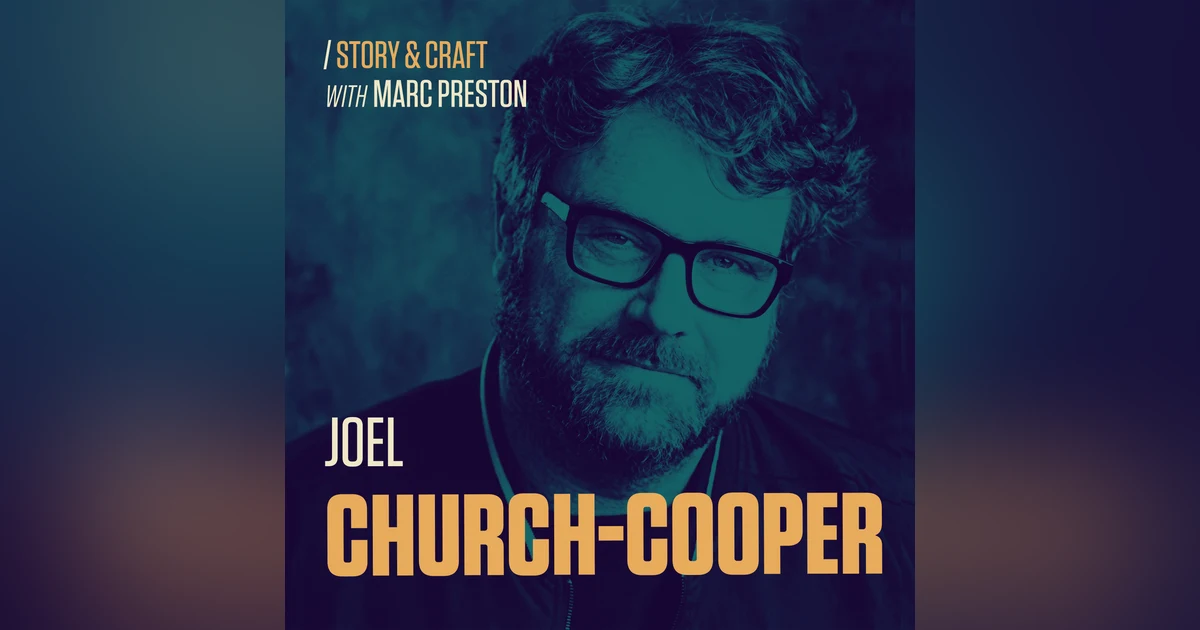
On this episode of The Story & Craft Podcast, Marc Preston goes behind the curtain with producer/writer Joel Church-Cooper (“Going Dutch”, “Brockmire”, “Future Man”, “Undateable”) to talk about how TV comedy really gets made and how the business has changed. Joel shares his Northern California upbringing, film-nerd roots in the video store era, and the comedy influences that shaped him (“Kids in the Hall”, “Mr. Show”). They dig into big studio comedies, as well as how algorithms and “second-screen” viewing are reshaping storytelling. Joel breaks down the origins of “Going Dutch” (including the real Army base that inspired it), the evolution of “Brockmire”, working with Seth Rogen and Evan Goldberg. It’s an engaging chat about what it takes to create great TV!
03:29 Film Nerd Origins
04:56 Video Store Era Stories
13:21 Comedy Influences and Sketch Classics
17:24 Public Access and Media Power
26:02 Going Dutch and Algorithm Notes
28:54 What He Watches Now
33:15 Kids Movies and YouTube Brain Rot
41:57 Chasing Authenticity
42:33 Brockmeyer Origins
49:05 Baseball as Existential Comedy
51:07 Future Man Writers Room
57:39 Why “Going Dutch” was set in The Netherlands
01:01:36 Culture Clash Comedy
01:03:13 The Seven Questions
Don’t forget to like, subscribe and follow!
Show Site: https://www.StoryAndCraftPod.com/rate
Show Substack Page: https://storyandcraft.substack.com
Show Facebook Page: https://www.facebook.com/storyandcraftpod
Show Instagram: @StoryAndCraftPod
Show Bluesky: @storyandcraftpod.com
YouTube: https://www.youtube.com/@storyandcraft
Marc’s Facebook Page: https://www.facebook.com/marcpreston
Marc’s Instagram: @airpreston
Marc's Bluesky: @marcpreston.com
[00:00:00] Joel Church-Cooper: My youngest, she's gotten into like old two thousands, like kid sitcoms. And then she'll be like, what? Have, what's this person look like now? And I'll be like, well, they're 35. Uh, here's what they look like. You know?
[00:00:12] Announcer: Welcome to Story Craft. Now here's your host, Marc Preston.
[00:00:17] Marc Preston: All right, here we are back again, another episode.
[00:00:20] Marc Preston: And I am so glad to have you here with me. I, I appreciate you coming back by and if this is the first time you've checked out Story and Craft, well doggone it. Thank you for checking in. Today, we're getting into the weeds, getting into how the sausage is made when it comes to, uh, creating television, uh, speaking with producer and writer Joel Church Cooper.
[00:00:41] Marc Preston: He has, uh, collaborated with the likes of Seth Rogan and Evan Goldberg on the show, future Man, also Undateable. He has, uh, written and, and created. Brockmeyer with the great Hank Azaria right now, though he created, uh, and is a writer on the show going Dutch on [00:01:00] Fox with Dennis Leary. It is, uh, a great conversation where we get a little behind the curtain, look at what goes into making tv, uh, in film.
[00:01:08] Marc Preston: It's, uh, very cool conversation again. And, uh, of course, uh, I always ask a little favor if you would make sure to follow Story and Craft on whatever podcast app you prefer. Also, check out the show at story and craft pod.com and, uh, we're getting into the whole Substack thing. And you may not even be on Substack, you may be going, you know, I don't need another social media channel, but this is actually kind of cool.
[00:01:33] Marc Preston: Uh, it's a great way to follow the show. You get an email every time a new episode rolls out, and, uh, of course I'm a big supporter of independent media and, uh, Substack is really kinda part of what's going on right now and the world of. Independent media. Just head to story and craft.substack.com. Alright, so, uh, let's get into it.
[00:01:54] Marc Preston: Uh, we're talking comedy, we're talking tv, and we're going Dutch because it's Joel [00:02:00] Church, Cooper Day, right here on Story and Craft. So where are you located? Right.
[00:02:07] Joel Church-Cooper: Um, I live in, uh, Glendale.
[00:02:09] Marc Preston: Okay, so still in the LA area. Yeah. Are you originally an LA kid or are you
[00:02:13] Joel Church-Cooper: Yeah, I'm from, uh, uh, Northern California.
[00:02:16] Joel Church-Cooper: I was born in Sacramento and then I, um, went to high school in Santa Cruz.
[00:02:20] Marc Preston: Naturally, I have to ask, are you into, uh, uh, surfing at all, by any chance?
[00:02:25] Joel Church-Cooper: Too big. I'm about six four, uh, two 70 for surfing Santa Cruz. Mostly fun, chill vibes. That's what I enjoyed about it. And I've lived in California, you know, I went to school in uc, Santa Barbara, so I've lived in California my whole life.
[00:02:41] Marc Preston: Very good. Very, yeah. I, 'cause I seem to remember Santa Cruz being a real big, uh, surf spot. I can't remember the, uh,
[00:02:48] Joel Church-Cooper: it, it's a very big surf spot for sure. I mean, I knew lots of, uh, kids in my class who were surfers. I just was never really taken by it.
[00:02:58] Marc Preston: I used to live in Encinitas, [00:03:00] uh. Uh, you know, in North county of San Diego.
[00:03:02] Marc Preston: And I, and I would meet people like, oh yeah, my teachers are totally cool. If the breaks were really good, you know, I could just, you know, not go to class that day or something, or show up late and the teacher would just understand, you know, I'm like much more understanding than my teachers in Texas would've been, you know?
[00:03:15] Marc Preston: But, uh,
[00:03:15] Joel Church-Cooper: yeah. Yeah, I went to school in Santa Barbara. It was definitely like going to the beach. Like if, if it was a Friday and the weather was good, it was just an expectation that, you know, you wouldn't go to class.
[00:03:27] Marc Preston: Did you go to college out that, or did you go to college or,
[00:03:29] Joel Church-Cooper: yeah, I went to, I went to college at uc, Santa Barbara, and I was a, uh, a film studies major there.
[00:03:35] Joel Church-Cooper: Um, and then I got a job, uh, as an assistant right out of college, uh, on a sitcom. And so I joined the industry very soon after.
[00:03:46] Marc Preston: So the whole, uh, creative thing, that thing kicked off early for you. So you knew it like high school, I guess, that this is what you wanted to do or,
[00:03:55] Joel Church-Cooper: yeah, I mean, I would say I was like.
[00:03:57] Joel Church-Cooper: Classic, um, [00:04:00] movie nerd kid. You know, this was the. Late eighties, early nineties when movies were at the center of culture, unlike now. And, uh, TV was kind of junk. Um, and I watched a crap ton of tv, don't get me wrong, but I, movies were the special thing and my dad liked to go to the movies and so we would go, you know, see at least a movie a weekend, sometimes two, he would call it a double bill.
[00:04:26] Joel Church-Cooper: We would find, you know, two movies that were playing, you know, where one ended, we could walk into the other one and Okay.
[00:04:34] Marc Preston: So you did that also? Okay.
[00:04:36] Joel Church-Cooper: I did, yeah, I did that too. And then we would like, do things of like, you know, we would come in together and then we would like go to the, we would like take off our jackets and grab a popcorn and then like go in separately to the second movie kind of thing to like, you know, uh, yeah.
[00:04:51] Joel Church-Cooper: So, and then when I was, uh, getting older, I, you know, getting. It was right when, where video stores were king, and remember, [00:05:00] Hollywood video had a deal where you could do 10 old movies for $10 for 10 days. So really, I just started going down, like
[00:05:08] Marc Preston: I didn't
[00:05:08] Joel Church-Cooper: know
[00:05:09] Marc Preston: they did. Yeah, I I had no idea they did that.
[00:05:11] Marc Preston: Uh,
[00:05:11] Joel Church-Cooper: I think that was their like big, uh, you know, move to like horn in on Blockbuster. And uh, so I just would go down like the list of a hundred best movies, a hundred best comedies, Ebert Leonard Marlton, you know, then I started going through directors film photographies. And then when I was older in high school, I got a job at a video, like the local cool video store in Santa Cruz.
[00:05:35] Joel Church-Cooper: So I got free rentals and I could, you know, and they had all these foreign movies and all the independent movies. So by the time I went to school. I essentially had a film school education. By the time I went to film school, I was the only one that see everything.
[00:05:52] Marc Preston: Yeah, I could see where that's, uh, completely possible, you know, because, you know, especially, you know, your, your Gen X kid also, you [00:06:00] know, late eighties, early nineties.
[00:06:01] Marc Preston: You remember all that. And it was like Friday nights were kind of an event. You know, you, it, it's sort of a cliche or a trope, you know, blockbuster and get a pizza, but that was. Kind of a thing when they moved to DVD. That was cool. I remember the unwieldy, the VHSI remember. Um, do you remember those video discs?
[00:06:19] Marc Preston: I don't know why that thought just popped in my mind. Not not DVD, but the big, they looked like the size of an album. Laser
[00:06:24] Joel Church-Cooper: discs.
[00:06:25] Marc Preston: Laser disc.
[00:06:25] Joel Church-Cooper: Yeah. Yeah. Got
[00:06:26] Marc Preston: it.
[00:06:26] Joel Church-Cooper: Yeah, my video store, I was there. So I worked at a video store in college too, so I was really, uh, you know, somewhat the stereotypical at the time, sort of film nerd.
[00:06:37] Joel Church-Cooper: But, you know, free rentals, you just can't, you can't, uh, the ultimate perk. And so, uh, in high school, I, we switched over to DVD and I was like young and plugged in. So I was like telling the owner of the store I was, because he had, he had the largest laser disc collection and it didn't go very well with laser disc.
[00:06:54] Joel Church-Cooper: And he was like, I went on a laser disc and I was like, this isn't laser disc man. These are, [00:07:00] you know, this is DVD and they have all the features and it's so much more affordable. And the picture quality is so much better than VHS because. You know, I look back on, I know I'm not one of these people who has like a home theater and is like obsessed with the getting the right blacks and the right sound system and you know, or like always having to be projected on film.
[00:07:19] Joel Church-Cooper: Uh, when I go see a movie, because when I growing up I experienced most of my movie watching, watching VHS, which is a crap, you know, system where low resolution, the, the screen's cut off and sound is shit. And like, that's how I fell in love with movies. So like, I don't really, you know, the, the compression rate of Netflix, you know, Netflix looks like shit and other reasons, but the compression rate doesn't really bother me.
[00:07:47] Marc Preston: Yeah, it's funny. Um, I still remember the phrase be kind, rewind, you know, and how they would ding you, like if you didn't rewind it and, uh, and they would sell the head cleaners, you know? I don't know why it's all popping the back into my mind, but, you know, you had to clean that.
[00:07:59] Joel Church-Cooper: It's not, yeah, I [00:08:00] mean, I'm very nostalgic for, for video stores and BHS and, and I was the guy who had to rewind the videos when you didn't rewind them.
[00:08:08] Joel Church-Cooper: And the, we had a, you know, we were independent video store. Um, and so independent video stores made money from renting porn and the, we had porn tapes. And the funny thing about porn tapes is they were always unre. Like you always had to rewind them. No one ever rero a porn tape. And there's something, you know, 99% of the people renting were men.
[00:08:32] Joel Church-Cooper: And, and it's like, uh, they would watch it until they did what they needed to do to the video, and then they would stop and they would turn the video in. And, and I always would joke that like, if you rewind 45 seconds, you could see the moment that like, you know, they were excited to finish. And then, uh, you know, and then also when we, when we would see it was a, it, it was a porn video being dropped in, we would like put a glove on and like [00:09:00] clean it because the odds of like them.
[00:09:03] Joel Church-Cooper: Completing the task, going to wash their hands. Then getting the video was probably, uh, you know, slim,
[00:09:08] Marc Preston: a very hotel, uh, remote control vibe going on there. Yeah.
[00:09:12] Joel Church-Cooper: Yes, yes.
[00:09:13] Marc Preston: Um, uh, the nostalgia of that, it, it's naturally my, my kids, my oldest is 23, my youngest is 20. And, uh, when we're watching Stranger Things, um, I think they did a pretty.
[00:09:25] Marc Preston: Interesting job of kind of capturing the moment, or at least the mall vibe, you know? Um, it's, I've, I've found myself in these little moments of nostalgia lately, you know, just kind remembering. And maybe it's 'cause the times we live in or maybe, maybe an era back. You remember back when, uh, comedy was king, you know, I mean, you had comedy movies coming out regularly and I've spoken to different folks and, you know, we talk about the economics of it and whatever, but, uh, I'm kind of curious as a, uh, gen X kid, what are your thoughts on comedy, uh, film, you know, like the ones, you know, just kind of the goofy comedies or just comedies in general and [00:10:00] just not having as many now as you did back in the day, and, you know, what, what are your thoughts on that?
[00:10:04] Joel Church-Cooper: Um, you know, I think it's, uh. Symptomatic of two things. Um, the increasing importance of, and if we're talking movies
[00:10:14] Marc Preston: mm-hmm.
[00:10:15] Joel Church-Cooper: The increasing importance of international box office comedy doesn't travel well. Um, you know, comedy's pretty language specific. There are comedies that have done well, but usually they're like, like I think the, the best international comedy.
[00:10:31] Joel Church-Cooper: Not the best. Top five was the ted, you know, the, the bear. 'cause you could dub anything into the bear's mouth and you know that's true. And it would curse in Spanish. It could curse in Romanian, whatever, you know. So, um, animation, you know, comedy translates very well, obviously 'cause you can just report the language in.
[00:10:50] Joel Church-Cooper: But, but sort of all the comedies that we loved in the eighties and nineties didn't necessarily translate necess layer action comedies. And that's where all screen [00:11:00] comedies kind of gone. One of those reasons because of that. But I also think the second main reason is, um, you know, a splinting of the monoculture into, you know, a thousand different mini cultures.
[00:11:14] Joel Church-Cooper: To laugh at something is a communal experience that has some relation to a shared understanding of the world. And I think we're, we've lost that, uh, in a myriad of ways. And, you know, the, the feeling of going to a crowd and laughing with a crowd and feeling something in unison is not something that our culture really seems to be aspiring to at the moment, you know?
[00:11:41] Joel Church-Cooper: Mm-hmm. I think, and I think it speaks to division, but I also just think it speaks to just the fragmentary nature of a, of a, you know. 25? No, I guess now we're probably 35 years into like the internet becoming, you know, the main medium through which we [00:12:00] seek entertainment. Yeah. And just hard to compete with, you know, whatever micro interests you have, you can find a hundred people that are into that, that you can talk to.
[00:12:09] Joel Church-Cooper: So going to a theater and having that communal experience doesn't, you know, work as well. And comedy on TV has kind of gone away too. And you know, but at the same time, comedy on, uh, front facing comedy on Instagram, on TikTok has, uh. You know, arguably the most popular format of social media. So it's not like people don't wanna laugh anymore.
[00:12:33] Joel Church-Cooper: It's just, I feel like, uh, they're doing it in ways that are more hyper-specific and hyper-targeted than, uh, sort of mass entertainment.
[00:12:45] Marc Preston: I know I've talked about on my show a few times, um. Missing, uh, uh, you know, the, the Judd Appell comedies, you know, going back to like, like Anchor Man. Just, just something, you know, you're gonna go in, you can disconnect from [00:13:00] reality a little, you can laugh, you know?
[00:13:01] Marc Preston: And I just kind of noticed that the stuff that comes out now, it just, it's a different tone. I, and, and maybe I'm a, I think being a Gen X kid, a little skewed. 'cause we grew up in like a tons of different kind of, I mean, God, we grew up with Sam Kennison and, you know, Eddie Murphy, you know, all that, all that stuff that probably wouldn't really fly right now, uh, to say the least.
[00:13:21] Marc Preston: Um, but what were you watching, you know, as far, if you wanna say what was not influencing you, but what, you know, if you looked at kind of the Mount Rushmore things that you were watching that, uh, kind of informed you, not just with writing, but just in general, you know, what, what kind of turned you on back in the day?
[00:13:38] Joel Church-Cooper: Um, I, you know, I was pretty omni, uh, omnivorous and omnivore. Um, you know, I watched pretty much every sitcom that was on tv. The only, the only ones I didn't watch were like the ones that were, you know, I would, there was, there was no time shifting, right? There's no on demand. So I would watch a, a comedy at eight 30.
[00:13:57] Joel Church-Cooper: I'd watch a comedy at nine, you know, and if there was [00:14:00] another comedy on at eight 30 that, uh, I didn't like as much, that would be the one I didn't watch. So I watched like five seasons of television shows. I didn't particularly like, I just liked them more than the other shows that were on at that time slot.
[00:14:12] Joel Church-Cooper: Like, I remember I watched every episode of Coach and I was never more than moderately entertained, but there's something about, uh, about rhythm and about. Comedy even in middling forms that I really liked from a young age. You know, I was seeing, I was seeing pretty much everything in the theater by the time I was like, I remember when I was 10, I saw Unforgiven in the theater with my dad, which is a pretty adult movie for 10.
[00:14:41] Joel Church-Cooper: Yeah, I have a 10-year-old. I don't think I would, was it Gene Hack? Original Tiger was Gene Hackman, yeah, yeah, yeah. With, uh, clin Eastwood. The original title of it in the script was the Cut Horror Murders. Uh, so that should give you an example of what I was watching when I was 10 with my dad. He just wanted to take me to whatever, [00:15:00] so whenever he wanted to see, so I would see everything in dramas, action movies, comedies.
[00:15:05] Joel Church-Cooper: My dad didn't like horror, so we didn't go see horror in the movies. But then on tv, you know, I'd watch One Hours. I, I really liked NYPD Blue, but I, I was definitely a comedy fan who preferred comedy and watched every, you know, comedy. I could, I think the game changer for me was. Let's see, I was probably in seventh grade, so, um, I'm 12, so this is probably 1993.
[00:15:31] Joel Church-Cooper: Um, kids in the Hall, Canadian sketch, uh, show, uh, I think had been on for a few seasons, but finally started airing on Comedy Central. And so I hadn't seen that and they were airing at every, they had enough episodes that hadn't aired on cable before that they were airing it like for me after school every day for like an hour.
[00:15:51] Joel Church-Cooper: You know, I think it's a fairly common experience of people my age, you know, that like kids in the Hall sort of for comedy nerds sort of blew my [00:16:00] mind. It was so much, um, uh, I would say more risk taking. There were avant-garde, certainly moments of it. Um, it was queer, uh, it was absurdist, uh, really well written, really well shot.
[00:16:16] Joel Church-Cooper: It was just unlike anything I had seen before. And it sort of, that opened my mind to. All kinds of alternative comedy and, and also sort of, I think, set me on the path to what I do now in terms of, you know, um, what I find funny and what I think is, you know, best about comedy, I think all starts from there.
[00:16:37] Marc Preston: Yeah. Do you remember, um, I dunno why it just popped in my mind, but, uh, not necessarily the news. Do you remember that show way back? I dunno if they put it on HBO or,
[00:16:45] Joel Church-Cooper: yeah, I think that was HBO that was a little before my time. Um, I liked the, the thing that was probably after, 'cause I was big into sketch, so the thing after gets in the hall was a show called Mr.
[00:16:55] Joel Church-Cooper: Show with Bob. Yeah, yeah. And, uh, [00:17:00] David Cross. And that, that was happening as I was watching it. Like Kids in the hall was like, you know, it had been maybe shot like three, four years before I started watching it. That was the only like, sort of thing that I was like very into as it was on, and both of them I think are pretty, you know, are considered like alternative comedy sketch classics, and.
[00:17:21] Joel Church-Cooper: I really gravitate to those, to those two shows.
[00:17:23] Marc Preston: Yeah. So your dad was kinda like you were a Sherpa to the theatrical experience, you know, doing the, uh, doing the double features and whatever. But I mean, what was his background? Did he, did he he have some kind of creative, um, gig or did he do something totally unrelated?
[00:17:37] Joel Church-Cooper: Um, he was sort of semi-related. He ran a, a public, he ran the public access, uh, television station. Oh, really? In Sacramento. So, you know, I think two things in my career came out of that. One, the belief that anyone should be able to make television. Anyone should be able to express themselves. You know, [00:18:00] uh, they used to have a slogan, free speech equals free media.
[00:18:04] Marc Preston: Mm-hmm.
[00:18:04] Joel Church-Cooper: I do think, you know, in the world we sort of live in now, you can see, um. The first thing that the powerful do once they take over communications, uh, networks, is try to limit, uh, your ability to communicate. Anyone, you know, on the new TikTok versus the old TikTok, you know, the American, uh, right wing, uh, owners took over and immediately limited what you could search for, what you could post, you know, change the algorithm to,
[00:18:33] Marc Preston: well, I now to, you know,
[00:18:34] Joel Church-Cooper: push things on you.
[00:18:36] Marc Preston: I remember being a kid, uh, remembering the, uh, not, I don't mean to be political, but, you know, the Republicans were b really, I remember, um, uh, Reagan broke up the, uh, uh, phone system. The, you know, at and t was, everything was a monopoly. And now there, when it comes to media, just talking about linear media, like you have two big TV groups, you know, that are gonna merge up here.
[00:18:58] Marc Preston: It looks like.
[00:18:58] Joel Church-Cooper: I mean, all of these, [00:19:00] every time it, you know, Fox selling to Disney, you know, uh. Every merger, you know, uh, at t and then Discovery, buying Warner Brothers, now, Warner Brothers selling to Netflix or Paramount, you know, uh, the options being like selling to, to Paramount and becoming a right wing government mouthpiece.
[00:19:24] Joel Church-Cooper: Right. Or selling to Netflix and, you know, eliminating theatrical distribution. Like, you know, it's pretty dark the other way. Yeah. I mean, the other countries don't do this, you know, unlimited monopolies and, um, fewer and fewer controls over the media. There are, are rules in place for reasons, and, you know, for my career, my industry, it's catastrophic.
[00:19:47] Joel Church-Cooper: The, yeah, it's less jobs, it's less shows, it's less options of shows, it's more control from the people running them. And, uh, you know, the, the thing that's sort of [00:20:00] unique about where we are now is there was a. Entertainment used to mean one thing, and now it sort of means another. By which I mean, used to be, have to be entertaining, right?
[00:20:12] Joel Church-Cooper: You go back, if we go from the, the, the days of filmed media, right? The beginning, I, I was, as I said, film studies major, so well aware of film history. So it starts with the Nickelodeon. You go to a, uh, you know, a hall, they have a little movie playing. You put a, a nickel in, you look at it, and then it plays like a 92nd, you know, two, uh, two minute clip of film.
[00:20:38] Joel Church-Cooper: You know, it's a train going through the station. It's a picturesque view of Moscow. It's two people. The kiss was a famous one of like two people kissing, you know, so that starts of like, you know, then they start projecting on a screen, then they start doing crowds to make more money. And, uh, it was entertaining and you went to be [00:21:00] entertained.
[00:21:01] Joel Church-Cooper: Now. Entertainment isn't about whether you liked it, whether you entertained, but why, whether you engaged with it. Right. It's about attention. It's, it's gone from interest to attention. 'cause you can give something attention that you have no interest in or not really. And so then when you're saying that like.
[00:21:22] Joel Church-Cooper: You know, algorithms now are, you know, from the major streaming companies are dictating, you know, certain story moves, certain kind of repeat of information because they're recognizing, well, our viewers aren't that interested in what's going on on the screen at any given time. It's a second screen experience.
[00:21:38] Joel Church-Cooper: They have their laptop open, they're, they're checking TikTok while they're watching the streaming movie. And so we, and so it's not about whether it's entertaining 'cause it, it doesn't, it it can't or we don't even care if it's, uh, trying to pull them back from the phone. We'll live with the phone. We just want it on to be background wallpaper that they enjoy [00:22:00] having on.
[00:22:01] Joel Church-Cooper: And that is a unique thing. I it that, that's, that's the thing. I'm, I'm, I don't know if I can ever really embrace being the second screen. You know, if you, I think if you're in reality tv, you're in a HallMarc movie kind of thing. That's a second screen experience. You, you know it. And they're, you know, I had a buddy who used to cut reality tv and there are things they do to pull you back to the television to, 'cause it's an important point.
[00:22:27] Joel Church-Cooper: They do like dings and like music stings.
[00:22:30] Marc Preston: Yeah.
[00:22:31] Joel Church-Cooper: Yeah. And erase the volume of dialogue so that you look up from your phone, oh, this is important, you know? That kind of thing. I, it's tough for me to engage in because that's not certainly what I, you know, this is commercial art. It's art in a commercial setting that has to have, you know, commercial compromises that I'm completely comfortable with.
[00:22:53] Marc Preston: Do you think there is, do you think this is a pendulum though? Do you think it's, it's, it's something that will swing back. It's generational. Like [00:23:00] maybe, uh, the gen, gen Z kids are finally gonna go, you know, I kind of want something a little, you know, they're the taste makers now. You know, they're the ones that kinda like in our, in our area, in our era rather back when, when like.
[00:23:11] Marc Preston: It's amazing when I still think that MTV is no more, because I remember years ago when I worked on the radio, they said you had to watch MTV to know the pulse of what's happening culturally in the country. You know, for a certain generation. Do you think that like the, the younger generation's gonna go, oh, kinda rediscover sitting down and, and engaging with 30 minutes or an hour of content?
[00:23:33] Marc Preston: Uh, not content like of, uh, of programming. Put it like that.
[00:23:36] Joel Church-Cooper: Well, I mean, for a lot of the kids growing up, there is no difference between, you know, two hours of scrolling on TikTok and watching a two hour movie. They two hour movies, you know, it's the same amount of time to them. And movies boring 'cause it's only one thing and they can watch God knows how many tiktoks.
[00:23:53] Joel Church-Cooper: Right? So I think, I think there, I don't know if it'll swing back. To ever [00:24:00] being, you know, the same sort of cultural center point. But, you know, I'm on Letterboxed, which is a sort of, you know, uh, social media just for like movies. And there's a lot of like younger generation, you know, people in their late twenties, early thirties.
[00:24:17] Joel Church-Cooper: I'm 45, so you know, a couple generations below me that are on letterbox and sort of falling in love with movies for the first time. The difference to me is it's kind of niche now. It's niche of like a certain perce, you know, high percentage. You know, like it's definitely like millions of people in America are of a younger generation and are getting into movies and revival screenings and logging the movies and talking about them, which I think wasn't the case maybe 10 years ago.
[00:24:48] Joel Church-Cooper: But it doesn't seem to be a mass movement. So it's tough for me to, you know. Like with each AI iteration that can, you know. [00:25:00] Deep fake, more and more slop, you know?
[00:25:06] Marc Preston: Mm-hmm.
[00:25:06] Joel Church-Cooper: I, I would hope that, uh, future generations will continue, continue to try to engage with visual art and choose it over slop. Think about slop, though.
[00:25:18] Joel Church-Cooper: It comes out thick and heavy and it's unending. It's, it's a, it's a tube that, that, you know, that will never stop. You cannot shut it off. And so it's tough to, I think that's, you know, not my pessimism, but my, my sort of cynicism maybe.
[00:25:37] Marc Preston: I was listening to, uh uh, Matt Damon say something in an inter interview the other day saying what you said with Netflix, like the way things are written now you have to reintroduce people to the plot intermittently, you know, because you don't know where they're joining the A DHD, whatever it happens to be.
[00:25:52] Marc Preston: But as a creative, do you have this little battle between doing it the way you want and the way it's gonna work on the screen? Is it a little bit of a [00:26:00] challenge for you or are you kind of obstinate going, I'm gonna do it my way?
[00:26:02] Joel Church-Cooper: You know, I'm in a unique position 'cause I have a show on the air right now called Going Dutch.
[00:26:07] Joel Church-Cooper: It's airs on Fox broadcast. So, um, in some way I'm doing a workplace sort of light sitcom that takes, you know, that airs on a broadcast network. So I'm like the most antiquated form of broadcast and television. You know, it's like this is not cutting edge. So I haven't really been given any sort of algorithmic notes on this project.
[00:26:34] Joel Church-Cooper: And of the other ones I've done. I haven't either. I, so I don't have any firsthand experience. I know that they do exist and specifically with movies. Um, they have certain kind of rules, but the thing that, you know, the algorithm, it, it sort of anesthetizes you to art, right? Mm-hmm. It, you know, the, the, the central reason.
[00:26:58] Joel Church-Cooper: They're like, oh, well, our research [00:27:00] says, or our numbers say means that we get the most engagement, meaning the least people turn it off if these things happen in this order. In a general sense, which might be true, but it's sort of like one of those things of like if you have a hundred percent rotten tomato movie.
[00:27:17] Joel Church-Cooper: You know, that doesn't mean it's the best movie of all time. That just means like a hundred percent of the critics generally were like, yeah, it's good. You know? Whereas like the best movies probably have like a 92% on Rotten Tomatoes 'cause they engendered enough, you know, dialogue that some people didn't like it, even though a lot of people really liked it.
[00:27:35] Joel Church-Cooper: Right. And so I think like an algorithm driven platform that is, you know, is feeding you things to consume, it's trying to make it go down as easy as it can. And I am, you know, I'm not, I've watched plenty of challenging art, you know, I went to film school, I've watched non-narrative art. I like sort of, you know, growing up in America the way I do, I like a classical Hollywood [00:28:00] storytelling, but I also like storytelling that challenges me and that is trying to tell me a story.
[00:28:08] Joel Church-Cooper: In a way I haven't seen before. And that's, you know, ultimately I still, I still think what I try to do and, you know, on this particular show, a lot of times the powers that be pushed back, but, um, I'm always trying to tell you a familiar story in an unfamiliar way, and I, I still think there's value in that.
[00:28:30] Joel Church-Cooper: And so, you know, if they pay me enough and, you know, I'm employed in this bleak entertainment Marcet, I'll listen to what the algorithm says too. But I still think my, my storytelling instincts, um, are a little more challenging than what the algorithm I think dictates.
[00:28:54] Marc Preston: Right now, what, what is it that you, you know, that you're like, okay, they're doing it right. I really enjoy [00:29:00] this. What's out there right now that's, that's kind of on your, I don't wanna say your DVR 'cause I don't know if anybody really dvs are a thing, you know, but
[00:29:08] Joel Church-Cooper: yeah, everything's on demand. Um, I, what I, what am I into now?
[00:29:13] Joel Church-Cooper: Um, um, a friend of mine created this show, Wonderman, that's on Disney Plus. It's like a Marvel show that's like, uh, a very unique Marvel show. 'cause it's mostly about two sad middle-aged actors, one of 'em who accidentally has superpowers. Um, I'm enjoying that. I think that's very fun. Uh, I went back and I watched, you know, some of the, the movies that got nominated this year, and I, I really like Blue Moon, uh, the Richard Linkletter movie.
[00:29:43] Joel Church-Cooper: Um,
[00:29:44] Marc Preston: yeah.
[00:29:44] Joel Church-Cooper: Anything you, I,
[00:29:45] Marc Preston: I love, yeah.
[00:29:46] Joel Church-Cooper: Yeah, I mean, he's, he's pretty prolific and so like, he's made a lot of movies. I've seen pretty much all of them. I'd say this, I think this is a top five. I would put it after the before movies and Dazed and [00:30:00] Confused, but I would probably put it, I could think that makes it fifth.
[00:30:04] Joel Church-Cooper: Um, I really think it's exceptional. I think the script is really good. The performance is good. It's also about, I've, I've written in a lot of creative partnerships. That's sort of what that movie's about, and it does get to it, you know, a, a, a truth about that experience of the ways your lives can become enmeshed and it starts to become difficult, whose idea was wasn't originally and what different working styles are.
[00:30:27] Joel Church-Cooper: And, you know, um. I thought I, and I, yeah. So I thought that was exceptional. I really liked, um, the Bone Temple, uh, 28 years later that I thought that was incredible. I saw that in the theater, just liked Send Help a lot, the new, uh, Sam Ramey movie.
[00:30:44] Marc Preston: Mm-hmm.
[00:30:44] Joel Church-Cooper: So like, you know, there's still good stuff being made and, and I try to support it, you know, as whenever something is good, I try to sort of, you know, with my eyeballs or my, or my wallet, uh, make my presence known to support it.[00:31:00]
[00:31:00] Joel Church-Cooper: And, um, yeah. So, so those, all of those things I think are, and all of them are the kind of thing that I'm talking about, which is that, you know, they're unexpected and they're surprising and I think the more. And I still think it's true, like the more, you know, you become inundated with certain types of storytelling and when things become rot and predictable, you can kind of tune out.
[00:31:23] Joel Church-Cooper: Yeah. And so I'm just a big fan of, you know, I just took, um, my youngest, you know, I, I live near a place called Vidiots, which they do like, it's a repertory house, so they'll play like, you know, older movies. And as I said, you know, growing up, a lot of my first time experiences watching things were video, you know, VHS DVDs I rented from the, you know, so I, things like, I had never seen Alien on the big screen or Thief on the big screen, you know, movies.
[00:31:48] Joel Church-Cooper: Oh. So,
[00:31:48] Marc Preston: so that's what this is. They, they, they kind of bring back older movies and get 'em up on the big screen. That's cool.
[00:31:54] Joel Church-Cooper: Yeah. And they do like programming and they do themes and they'll do, you know, Rob Reiner passed, they've been doing [00:32:00] Rob Reiner movies and so they did a screening at four o'clock, like right after school for Princess Bride.
[00:32:06] Joel Church-Cooper: And I took my youngest daughter. And, uh, took her a little while, but she locked in on it and was really having fun by the end. And she, the one thing she screamed at was like, with about 10 minutes to go, she was like, nothing is happening in this movie the way I thought it was gonna happen. And I was like, yeah, that is kind of the strength.
[00:32:25] Joel Church-Cooper: It's William Goldman, right? One of the great screen screenwriters wrote the book originally and then adapted his own book. And that is kind of the key to it is it's a fairytale that ends with the good guys win. You know, they go off and get married, love triumphs, but every single step on the way to get there doesn't happen in the order that it would in a normal fairytale.
[00:32:45] Joel Church-Cooper: He dies halfway through, you know, like, you know, he disappears from the story immediately, you know, 'cause he like dies off of the thing, then comes back. Like, it just is unpredictable. Well, you know, and I just, I do think that's what everyone [00:33:00] is, is if you're trying to go for a story for entertainment, which most people are, then I think that's what you want, which is you want.
[00:33:07] Joel Church-Cooper: You know, an unpredictable, an unpredictable journey to a safe, warm place, you know, at the end that you hoped it went to.
[00:33:15] Marc Preston: Well, how old are you kids?
[00:33:18] Joel Church-Cooper: Um, they are 10 and one's six, about to be seven and Okay. Count down the days.
[00:33:25] Marc Preston: So you still have Disney Channel, uh, show theme music in your mind all day long.
[00:33:30] Marc Preston: I don't know if you're, because my kids were like, I could, it's so, it's so strange to be at that age now where some of their, the Disney Channel kids they grew up with are now very much adult actors, you know? Uh, and I'm like,
[00:33:42] Joel Church-Cooper: yes, yes. My youngest, she's gotten into, she's gotten into like old two thousands, like kid sitcoms, and then she'll be like, what have, what's this person look like now?
[00:33:52] Joel Church-Cooper: And I'll be like, well, they're 35. Uh, here's what they look like, you know? Yeah. But they love, uh, the [00:34:00] thing, you know, my, my victory as apparent is they both like going to the movies. They both like watching tv, which, you know, back in my day it was like, oh, you're gonna, TV's gonna rot your brain. Well, now we know what true brain rot is.
[00:34:11] Joel Church-Cooper: And it's, it's the YouTube algorithm. And it's social media, non stop streaming. Actual television with storytelling is much better, you know? So there was a while where they would, you know, I have screen time on their all their devices and they'd be like, I don't watch YouTube. And I'd be like, no more YouTube.
[00:34:29] Joel Church-Cooper: And I was like, you can watch wherever you want as long as it has a story.
[00:34:32] Marc Preston: It's funny you YouTube, because I think they're doing. They're doing it for adults too. I think there it is. Not just the kids can kinda get wrapped up in the algorithm. Because I was noticed, I'm a big fan of independent media. I mean, what we were just talking about before with the corporations and all that, I mean, I'm trying to support that.
[00:34:48] Marc Preston: You, I've even noticed, uh, you know, the big thing now is the thumbnails. They try to like, you know, I, I wanna go get little bits and pieces of like, news commentary, you know, something that's, that's somewhat [00:35:00] unbiased. But, you know, I wanna feel like I'm a little educated on the moment. But you look at. The way they try to pull you in and it's almost like, uh, not a dopamine hit.
[00:35:07] Marc Preston: What? Like the, they want to kick that fight or flight button that, you know, when it comes to news. Sure. You know, I used to kind of goof on like the, uh, BBC way of doing news where they sit there just reading a teleprompter, uh, in a very boring way. I kind of miss that, you know?
[00:35:22] Joel Church-Cooper: Yeah. I think that, to me it's just, again, it goes back to the point I was making earlier about like the difference between entertainment and like attention and engagements, right?
[00:35:32] Joel Church-Cooper: They don't really want to entertain you. They want to engage you. And the, and the quickest way to engage you is with a soldier returns from war and the dog recognizes them. You know, like, ha Which honestly, all that shit's now ai, like the easiest thing AI can do is do, and you can always tell 'cause like.
[00:35:51] Joel Church-Cooper: The fucking animal will like do something and cheat the camera like Jim from the office. Um, all AI animal videos do that now, and it's such a ridiculous [00:36:00] sort of like, you know, but people love it. Oh, look at the dog and look at the camera. Right? And they can't tell it's fake and they love it, right? So something gives you the warm oz that'll get shared, that'll get engagement, right?
[00:36:10] Joel Church-Cooper: Or something that, you know, one, wherever you are on the political spectrum, right? If you're white wing being like, you know, there force feeding hormones into your children's food at school, whatever lie bullshit thing gets you to click on the article and now you're watching a video and then you watch one video, and then that's sell you another video.
[00:36:29] Joel Church-Cooper: If you're on the left, you know, it'll be, you know, I mean, how many. Things do I have that? Like, look what trunk's up to now, you know, and then whatever. And then we're, you know, and then we're engaged in that sort of, you know, and
[00:36:43] Marc Preston: then you have that moment where you go, how long have I been watching this?
[00:36:46] Marc Preston: Like, why am I still watching this? You ever have that moment go like, well, I, I've just been sitting here watching, and it's, it's a daisy chain
[00:36:52] Joel Church-Cooper: effect. Like, well, that's, yeah. Where they call doom scrolling. I, I do think there's a, you know, there will be a movement away from. I mean, [00:37:00] we're, I've told my oldest that like, you're not gonna be on social media till, you know, late high school.
[00:37:05] Joel Church-Cooper: Yeah. Like, I think they'll, we'll look back on like giving children social media in 20 years and be like, you know, giving a 10-year-old a cigarette, you know, like, you know, or, or in my generation un unfiltered access to Coca-Cola products. You know, like, my, my kids go now, like, so you guys used to just drink caffeine soda?
[00:37:27] Joel Church-Cooper: I was like, all day long. That's all we do. Sugar and caffeine.
[00:37:30] Marc Preston: Yeah.
[00:37:31] Joel Church-Cooper: Um, I think that'll be what social media is in the future. 'cause it just is like, it's just not good for kids to have and, and the doom scrolling and, and, and I think even my kids, like, they get annoyed by the screen time, but my oldest sees the point of it, you know, that like, and, and it helps that like, I put an app blocker on my phone.
[00:37:50] Joel Church-Cooper: I give myself screen time, you know, because that sort of two hour. Three hour time suck where it's eight o'clock and you [00:38:00] start checking reels on your phone and all of a sudden it's, you're, you're getting tired and you're ready to go to bed. And where did the night go? You know, I think that, um, that's a dangerous three hours because you're not thinking, you're not really engaging with anything.
[00:38:15] Joel Church-Cooper: You're not, you're not even engaging with a story. You're not learning anything. It's just the, the, the lizard part of your brain is just getting tickled, you know, and you have the illusion of choice with the ability to scroll. So like, you know, I, I think ultimately that's bad. I think it's bad for the human mind.
[00:38:33] Joel Church-Cooper: And, you know, I think I, you know, the comparison I would make is to analytics in sports, right? Where it's like the more math sort of got into baseball, got into basketball. They, they changed the game in certain ways that, you know, in basketball pointing out that the three pointer was underutilized and, you know, it's, it's worth so many more points.
[00:38:59] Joel Church-Cooper: You [00:39:00] should jack up as many threes as possible. Baseball strikeouts, walks, those are the most important thing. Like, keep put, putting the ball in play. Contact speed don't really matter that much, right? So the analytics pushed the game in a certain direction. That became actually, you know, I think both games are more aesthetically.
[00:39:19] Joel Church-Cooper: Displeasing than 20 years ago. Versions of it. Right. That's really
[00:39:24] Marc Preston: interesting. Say there's, there's less passion. I don't find that people get passionate at the same, in the same way about it for the same reasons. You know, EE even now it's like this, uh, I was watching something the other day about, you know, talking about having a phone in your hand.
[00:39:37] Marc Preston: The, the gambling aspect of it. So they're, they're, yes. Tapping different parts of people's brain. And I don't know how much, like when we were watching stuff, there was joy. There was, I don't wanna say joy, but there was more of an emotional kind of connection as opposed to a reactionary connection to something.
[00:39:55] Marc Preston: I, I dunno if that makes any sense or not. Um,
[00:39:58] Joel Church-Cooper: yeah, I just think just finishing off the [00:40:00] point of like, and referencing what you're talking about, like, I think that that sort of data analysis for an algorithm for social media is also pushing us to things that like, are. Not, not only not good for us, but like if you actually looked back and you thought about it is like not that entertaining.
[00:40:20] Joel Church-Cooper: It's just mm-hmm. Addictive and there's just so much of it, you know? And so I think that like, yeah, the danger is, and we're pushing entertainment to a place of, um, it's cool whip, you know, it's like all, it's all empty calories that have no actual value at all, but it tastes good and, you know, you can have as much of it as you want.
[00:40:43] Joel Church-Cooper: Right? And I don't, you know, it might be the sort of internet streaming company's, you know, that's their prerogative. I ultimately, I do think, like, I don't know if it'll be, uh, if it'll, we were talking about if it'll switch back, but I do think there will be, in the [00:41:00] future, a large percentage of people that will reject this.
[00:41:02] Joel Church-Cooper: And there's a thing called the dead internet theory, which seems to be coming true, uh, which is essentially like. The internet is becoming more and more broken and more and more false, you know, with all these fake videos.
[00:41:17] Marc Preston: Yeah, yeah.
[00:41:17] Joel Church-Cooper: And so at a certain point, if you cannot believe anything you see on your phone, why would you engage with it to the same degree, you know?
[00:41:25] Joel Church-Cooper: Yeah, absolutely. If influencers, if sports, if, I don't know if this clip is real or if it's not, like why are we, you know, why do we wanna live in a world of pretend online? Um, it was one thing when these devices were windows onto another world that maybe was happening outside of where we were, that could be more exciting.
[00:41:44] Joel Church-Cooper: But if it's an invented world, uh, that we don't engage with or don't appreciate, you know, I, I, I think at a certain point people will lose interest in it because it'll just have no actual meaning. I
[00:41:57] Marc Preston: think that's instinctive because I remember [00:42:00] back, let's see, I got into doing, uh, you know, I was in radio for a while, you know, and voiceover and there was a phrase like real person conversational, authentic.
[00:42:09] Marc Preston: It was, it was, it started in the nineties or that's when I first heard, when I first got involved, uh, started performing and. That accepts snowballing more and more and more. You know, you want authenticity, and I think that's our default position as humans. And if we're not consuming something which is authentic after a while, it's like, like you said, a bunch of empty calories.
[00:42:28] Marc Preston: We want nutrition. And, and that's gonna be the thing that kind of, you know, turns us on something a little bit different. Like you mentioned sports and I look at like, uh, you know, Brockmeyer as being just kind of a, a story within sports, which is, you know, cool. But the genesis of that wasn't even, uh, wasn't it a funny or Die thing or maybe am I imagining that?
[00:42:48] Joel Church-Cooper: No, it started off as the Funnier Die video. It really started off as a character that Hank Gazar, um, had been a voice and a character he had sort of been doing. And then he brought that character to Funny or [00:43:00] Die, and then they did the Funnier Die video. I was at Funny or Die, but I didn't work on that video.
[00:43:05] Joel Church-Cooper: Um, but I liked it and thought it was funny. And then at the time I worked there, which was like maybe 2010, uh, 2010, 2011, um, I was kind of their sports guy because, um, the, the Venn diagram of comedy nerd sports nerd. You know, it's very, it's a thin slice in the middle. Yeah. So there wasn't a lot of guys that, you know, love sketch and comedy like I did that also could run for any of the major sports.
[00:43:32] Joel Church-Cooper: And so I started doing all of their, I did stuff for the NFL network. I did stuff for TBS playoff baseball. I, you know, whenever they would come to funny drive for sports. I started, uh, you know, working with professional athletes, which was cool. And one of the things that we worked on was a series of appearances with Hank er as Brockmeyer.
[00:43:51] Joel Church-Cooper: And I, I sort of instantly, uh, felt at home in the character because I had grown up listening to baseball and the radio and [00:44:00] knew these guys, knew the Bob Eker knew, you know, Marty Brennaman in CI Cincinnati, you know, knew, uh, you know, Keith Hernandez in New York. Like these sort of like larger than life.
[00:44:13] Joel Church-Cooper: Baseball broadcasters who were kings of their local Marcet. And um, and you know, there I thought there was a lot of comedy in, you know. The way they would do these digressions, you know, because as sort of people who know baseball, you know, they know that in any three hour game, I think there's 17 minutes of actual gameplay, maybe less.
[00:44:36] Joel Church-Cooper: Yeah. Yeah. So it's a lot of, it's a lot of time to fill, right? And so you get these verbose, um, always men with deep voices and uh, real characters. And so I got the voice and, and wrote for him and was able to do appearances in that voice. And, and really, you know, I had a lot of fun with it. They asked me to write a movie [00:45:00] with, uh, I wrote a movie that we almost got made with Hank and Marissa Tome, uh, playing the female lead.
[00:45:07] Joel Church-Cooper: And then the money fell out. Independent production as sometimes happens, usually, you know, it happens a lot in independent film. And then it was kind of dead. And then I started working in TV, comedy writing sitcoms, and they came back to me and they're like, Hey, do you want to pitch this as a show? I said, yeah, in some ways it makes more sense as a show.
[00:45:25] Joel Church-Cooper: And I, my experience at that point was much more on television. And so, and it was really at a unique time. It was like 2015. So it was sort of, I, I would think now that's considered sort of the golden age of sort of, you know, television, media, cable still existed, you know, it was right after the Sopranos and Breaking Bad and the Wire and, uh, girls, you know, uh, so it was like, what, what is a half hour comedy?
[00:45:55] Joel Church-Cooper: What is a drama? What can you do? How far can you push? It was all [00:46:00] sort of up in the air, and I really sort of, I wanted it to be in the world of sports, but really be about America. And I, you know. Because I'm a cynical person, but I, I, I, I also, you know, wanted to, to have a sort of theme running through it.
[00:46:16] Joel Church-Cooper: And so right away from the first season I was like, oh, the show is, uh, a man gets better as a country gets worse, that's the show. And so I took this sort of degenerate and I sort of, you know, had him be propagated in his degeneracy, then I had him get sober. Then I had him sort of work through what being a good person feels like then what being a good father feels like all the while the background is the sort of country's falling apart around him.
[00:46:44] Joel Church-Cooper: Now, I didn't know in 2015 how accurate, you know, my cynicism about America was gonna be. I think it's one of the reasons that the show really holds up. It's just on Netflix now and I'm getting a lot of people responding to it again. Um, 'cause it was sort of not available [00:47:00] to stream for a couple years. And you know, the final season of the show takes place in a apocalyptic 2030s where there's a AI company that has completely taken over the entire economy and a sort of right wing fascism, government, fascist government.
[00:47:16] Joel Church-Cooper: No, I, and I wrote that in 20, you know, 19, you know, and so then it came out in the, uh, pandemic of 2020 and was not the kind of vibe people were looking for. But I do think if you watch it now, there's a lot of jokes that I think will play as commentary on our current moment that I wrote.
[00:47:34] Marc Preston: I didn't, I didn't catch that season.
[00:47:35] Marc Preston: I, I, I need to go back in and watch that. You a little funny side note. Um, my kids love going to baseball games. You know, I was in New Orleans at the time and I was like, you know what? I've done everything on a microphone. I think you could do, but I've never done pa announcing for, you know, professional sports.
[00:47:49] Marc Preston: I was like, maybe I could do that. There is a AAA team, uh, for the Miami Marlins in New Orleans, and. I was like, oh, sh shit, I'll go do that. Why not? So I, I decided for a couple seasons to do that and [00:48:00] it's, it is kind of exhausting 'cause you're dealing with at least 70 games per, you know, season. I'm like, had other things going on.
[00:48:06] Marc Preston: I didn't realize what kind of a time suck it would be. But it was cool. My kids can come and Stadium was near the house and they did a, they did a brockmeyer night and they had the, they had these cr daddies jerseys, uh, that that would they give out? Yeah. So they just, I didn't know if you knew that, that
[00:48:22] Joel Church-Cooper: Yeah.
[00:48:23] Joel Church-Cooper: Read because we, that year we did a, um, we did, I have the patch here somewhere for the CR daddies. I was really proud of coming up with the name New Orleans CR Granddaddies and then. I gave a lot of input on the, the logo and the mascot. If there's anything, I, one of my true joys in working in this business was getting a chance to design a fake minor league teams logos and colors.
[00:48:47] Joel Church-Cooper: I even love this. The first team was the Morristown Frackers, and I based their color on the seventies. Padres like mustard, uh, you know, yellow and Oh, yeah, yeah. Dark brown. You know, so I, I, you know, [00:49:00] I, I really do have an affinity and, and the love for baseball and, and in all its forms. And going back to what you're saying, what I, what I tried to sort of invest in the show is I think baseball because it's 162 games, right?
[00:49:15] Joel Church-Cooper: No, and it's a very, what I always say about baseball is because it's America's first sport and really one of the first, you know, I guess you could say soccer, tennis, you know, predated golf, but it's one of the first spectator sports that really like, took off. And so it's almost like, uh. It's like when you see like a, you know, a Nautilus or something in the ocean that's like 60 million years old and you're like, why does it move like that?
[00:49:42] Joel Church-Cooper: And you're like, well it took a while for evolution to sort of like, there's these archaic things about baseball that like would never fly anymore. You know, if you were to design a game. Now knowing what we know about sports, one of them is it's 162 games. So there's something about like every day you're playing a game.
[00:49:58] Joel Church-Cooper: Every day you're playing a three hour game. [00:50:00] So there's something very existential about baseball. 'cause it's day to day you're not even really building. There are big games, but there's a big game and there's a game. The next day you, you struck out, you know, five times, okay, there's a game tomorrow and there's something about that like life that every day, the drudgery that you keep going that like that's a part of the game that I think is a beautiful part of the game.
[00:50:21] Joel Church-Cooper: But, um, I thought it related well to a kind of existentialist comedy, you know? And so we sort of leaned into those, uh, themes, I think.
[00:50:31] Marc Preston: Yeah, I think that baseball gives you a chance. It's a lot of time for introspection, you know, you know, a lot of time, like you said, there's only 17 minutes of play or whatever that is, you know, whatever you got.
[00:50:40] Marc Preston: So there's always some kind of promotion or something that, you know, the owners wanna make money and, and, and, and minor league ball is its own world, which is, you know, 'cause you've got these guys that are working their way up at the same time you got guys that are multimillionaires coming down because they're a, you know, they were injured or something.
[00:50:57] Marc Preston: It's just, just, I'm just like an, an [00:51:00] infinite observer. I just like watching, you know, just the personalities and stuff like that. So it's a, it's a wonderful canvas, uh, to paint on. But, uh, but I was gonna ask you the, uh, for the future man you did work with, um. Uh, Seth Rogan and Evan Goldberg. What, how did that partnership come along?
[00:51:17] Marc Preston: Was it, was it, uh, were they involved in Funny or Die or, or how, how did that come together
[00:51:21] Joel Church-Cooper: for No, it wasn't through Funny or Die. It was after Brockmeyer. I came in and interviewed on the show, um, and the first season and I think didn't get it, but came very close. And then for the second season, I think they had regretted maybe not hiring me.
[00:51:37] Joel Church-Cooper: Um, and so they reached out again and, um, you know, I was show running my own show, but it was a, you know, the current way that television works is it was eight episodes. It was on cable, so like even show, running your own show, I had to work on other shows during the off season. So I would work on Feature Man in between seasons of, um, Brockmeyer and I loved, [00:52:00] um.
[00:52:01] Joel Church-Cooper: I love sci-fi and I love all the movies that they're referencing and sort of pulling from and sort of iterating off of and you know, and I liked that it was a sci-fi comedy where we were like trying to, you know, keep the rules consistent and really create a sci-fi universe that sort of made sense. Um, and it was great Point.
[00:52:23] Joel Church-Cooper: Gray was the company that Seth and Evan run. Uh, really artist first, you know, great people, no assholes. All the people they hire, the directors or all people they've worked with before. Um, Ben Carlin was, yeah.
[00:52:39] Kind
[00:52:40] Marc Preston: even goes back to that, uh, Judd Aow, the, uh, oh God, what was that show? The show happened. They all these guys worked together on, in high school.
[00:52:47] Marc Preston: Freak Meeks. Freak Meeks Freaks.
[00:52:50] Joel Church-Cooper: Yeah.
[00:52:50] Marc Preston: Which is funny how that show didn't run longer than it did, but, but it seems like that whole ecosystem of, uh, guys and gals, they just kind of all sort of still kind of interact [00:53:00] in one way or another and, and they're all doing
[00:53:02] Joel Church-Cooper: good stuff. Yeah, I think definitely the company Seth is running is different than Judd Aaus in different ways, but I do think he is pulling things, obviously.
[00:53:11] Joel Church-Cooper: 'cause you know, Jud AAU found him when he was like a 16-year-old kid. So like, uh, he's definitely like, it's a version of, you know, that sort of world. Um, and so that was a great show to work on. Really loved it. One of the, you know, it got, it was expensive and it got pulled off, I think as, as a write down.
[00:53:31] Joel Church-Cooper: And so I don't even know if it's streaming anywhere now because it got sort of, when Zav started LOV and other people started like, like, and Zav. So it got lov off of Hulu. But there was a really good idea that I, I didn't write, but I pitched a lot on that I thought was so interesting, which was we told an episode that took place in the last season in a, in a time pocket.
[00:53:56] Joel Church-Cooper: So it was like a pocket of time where time didn't exist. [00:54:00] And trying to tell a story in, in a place where time doesn't exist, I thought was very fun and challenging. Um. And I thought we did a really funny job with it. Um, it's a bummer that like, you know, it's difficult to, to see because, uh, I do think the whole show was really funny and smart and expensive.
[00:54:24] Joel Church-Cooper: It looked great, you know, which I think are all things that are rare these days. Like everything kind looks like shit. There's been many dark challenging times in the industry in the last, I would say, five, six years. And, uh, the idea that work, you know, the, the old industry that, you know, I grew up with, like, you know, if it was television, it aired once, maybe there'd be repeats.
[00:54:49] Joel Church-Cooper: It kind of went off into the ether and to never be seen from again. And so there was a certain zen, you know, riding in the sand on the beach, the waves are gonna wash it away, quality to it. [00:55:00] But at least people saw it. Yeah. The idea that you made something, you, uh, craftspeople made it, people acted into it.
[00:55:09] Joel Church-Cooper: 80 a hundred million dollars was spent on a TV show. On a movie. And that all it exists now is as a tax write off and as a tax Roth, it can never be seen that. Um, you know, IW and I had experienced that a little bit too, 'cause I worked on the second season of mx, which was an HO Max show. Zav was lov and he was k killing things left and right.
[00:55:31] Joel Church-Cooper: And I was like, oh, he is gonna kill this show. It's expensive. It doesn't fit in with what he wants. HT O Max to me, they don't own it. So there's all these reasons. It doesn't make sense if he's gonna fuck with things. But we were in the writer's room, so I'm like, we had guaranteed contracts, so I'm like, they're probably gonna just pay us out and just cancel it and we'll never go into production.
[00:55:48] Joel Church-Cooper: Well, we went into production. I was like, great. Wrote a season that I was really proud of, you know, uh, looked great. Very fun, very good show. And then. [00:56:00] Uh, production was wrapping, like first week in January, last week in December, they canceled it and they let the show go on, not because they wanted to see it, but because they wanted a bigger tax write off.
[00:56:15] Joel Church-Cooper: So they didn't cancel it in the beginning because they wanted to let it go, and, you know, so they could take a bigger write down on it. We eventually, like, sold it to, you know, the season was complete. Lionsgate owned it. They put it on stars, no one saw it. Now it's on Netflix. People are finally watching it.
[00:56:33] Joel Church-Cooper: But that was a new experience for me to be like, we weren't, that's
[00:56:36] Marc Preston: gonna be soul crushing. It's, it's like being a chef and cooking, knowing there's gonna throw your food in the trash, you know?
[00:56:41] Joel Church-Cooper: Yeah. It's very, it was very strange. And, and you know, I will say that like, I don't think it was successful that, that, that, you know, that, you know, it, it was successful in terms of that David Zaslav is, is a lot richer than he was before.
[00:56:54] Joel Church-Cooper: But in terms of like the company's health, you know, they never could get out from under the debt. Um, [00:57:00] it's not good to be known as a company who doesn't produce things. Um, and then I would say they had a really good run of movies and they hired really good people like Mike DeLuca, um, good people, meaning smart and, uh, good taste.
[00:57:16] Joel Church-Cooper: Um, and he did a string of hits this year, and then they sold it, you know, or, you know, they, they, it sort of was treating this company as, uh, you know, like a pump and dump and, uh, uh, you know, and it, it was stupid. And yet, you know, ZLA was having a last laugh from his yacht. Right.
[00:57:38] Marc Preston: Chef? Well, I mean, one question to kind of go back to, uh, to, to going Dutch.
[00:57:43] Marc Preston: Um. How did you come up with the idea of it taking the, the show taking place in the Netherlands? What I mean, was that just, uh, I don't know if any show I can think of has ever taken place in the Netherlands, like in other, or, or set in the Netherlands rather. Um, what was, how did that idea come to you? Uh, [00:58:00]
[00:58:00] Joel Church-Cooper: Dennis Leary was a fan of Brock Meyer and, uh, we'd had, we had had a couple really good meetings where really vibed and he came to me about developing a show for him, a sitcom.
[00:58:12] Joel Church-Cooper: And I, uh, you know, was in a head space of Dennis Lay was one of our great comedic yellers. He's a blue collar guy. Oh yeah. Even after being famous for 30 years. So he's fireman. He is played a lot of cops. And I was like, oh, he hasn't played a lot of soldiers. And so I was like, well, he is so good at yelling and we could make him like a high up guy.
[00:58:31] Joel Church-Cooper: He was like angry, like a real American tough man. Um, and, and then I was like, okay, well if that's the character, what's the funniest place to put him? So I googled least important US army base in world. And this space called skin in came up that has closed but closed in like maybe like 2012. And it closed for all of the reasons we make fun of this space for like, it doesn't, it didn't really have [00:59:00] to exist for any reason.
[00:59:01] Joel Church-Cooper: They were constantly giving it jobs for other bases that the other bases could have done. And, uh, it had, the, the true thing about it was, it was the, it, what it was known for was having the best bowling alley in Northern Europe. So they would, so they would have army wide German, like they would have like bowling tournaments there from the German bases.
[00:59:23] Joel Church-Cooper: 'cause this, you know, bowling alley was better. And there was a, the, the other thing we stole from the pilot was they had a teen center, but there were no children on base. So I thought, you know, this is funny. Like the idea of sticking this guy in this kind of purgatory where, uh, you know, he wants to be, you know, uh, MacArthur, he wants to be patent, he wants to be on the pointed edge of the American sword being thrust into some international conflict and instead he's stuck in the one place, nothing ever happens.
[00:59:54] Joel Church-Cooper: I thought that was funny. And then we came up with the daughter part of it to give it a little, uh, that, [01:00:00] that the reason he is sent there is as punishment because, you know, he is estranged from his daughter and his daughter, uh, you know, is assigned there. And so the idea that there's a workplace comedy smuggling in a family comedy, you know, we sort of liked and you know, that's the way we came up with it.
[01:00:18] Joel Church-Cooper: And then, um, Fox was looking for a show for him and wanted something that was to air aff after animal control, which is another sort of wacky workplace comedy. So. We had an idea that, um, it would fit in with what they were looking for, and we were right. And you know, like it's a very fun show to make we shoot in Ireland, which was, you know, unique and interesting.
[01:00:41] Joel Church-Cooper: Um, and another statement of where we currently are in the entertainment industry. I'm shooting in American Sitcom in Ireland, but the show, as you said, is based in the Netherlands. So, um, having a European setting does help, you know, we, we can go outside and shoot an island and it's gonna double for the Netherlands a lot easier.
[01:00:59] Joel Church-Cooper: [01:01:00] But, um, yeah, my best
[01:01:00] Marc Preston: friend's from, uh, from Holland and I, I do appreciate the, uh, very first episode. You know, you didn't bring up Stroop waffle, which is, you know, it's, they have the best snacks in the world in Holland, you know, and, uh,
[01:01:11] Joel Church-Cooper: I do. And they love, they love, uh, I forget the name of it, but it's like, uh.
[01:01:15] Joel Church-Cooper: They love Ball Over You happy hour. The bitter ballin, they, they love, yeah, they love a happy hour snack. That is like, sort of a cultural thing of like you going with your friends to the bar cafe and eating fried things and drinking, you know, beer or wine from the hours of four to seven is a, you know, cultural wide thing.
[01:01:36] Joel Church-Cooper: You know, we, we do a little bit of Netherlands stuff. It's, it's a lot about, um, Americans living abroad in sort of the con the, the, the, uh, culture clash between an American military base and, you know, a Dutch society that is, you know, sort of. What I say is like, Americans always talk about freedom, but they just, you know, the [01:02:00] Americans who talk about freedom, the most mean the freedoms to say, you know, racial slurs and uh, and shoot and whoever they want.
[01:02:06] Joel Church-Cooper: So, you know, actual freedom is like you can find in the Netherlands of like, I'm married to nine people. Uh, I, you know, like, I believe I'm a vampire. Uh, I only wear loin cloths. You know, like actual freedom is like doing whatever the fuck you want as long as it doesn't hurt somebody. And, um, and that's, you can see that in Amsterdam, you know, not necessarily, you know, where this base is located, the, where we base it on this base skin and it, it's in the sort of like southernmost tip that's surrounded by Germany and Belgium.
[01:02:39] Joel Church-Cooper: So it's actually kind of that area would be. Even people in Netherlands consider it like, not really the Netherlands, 'cause it's sort of its own little orphan area that it's a little German. It's a little, it's a little Belgian. But, um, so we sort of have a little fun of, of, of the sort of Dutch, uh, uh, you know, open society [01:03:00] that maybe doesn't quite exist there, but, you know, it's still more fun to sort of contrast that with American military culture.
[01:03:13] Marc Preston: Before we get going, I got my, what I call my seven questions. I can like throw that on the back end here. A little extra fun, just randomness. And I always talk food when we've done that. Talking about beer balling and was it freaking Dell? That's another good one in, in Holland. Uh, first question I ask is, uh, what's your favorite comfort food?
[01:03:30] Marc Preston: That thing, good day, bad day doesn't make a difference. Just, it just makes you feel good. You know, it's, it's kind of home for you.
[01:03:36] Joel Church-Cooper: Um, I would say. I would say the comfort food. I'm gonna, I'm gonna bifurcate this into two different comforts, comfort food. If I want something that's sort of gonna make me feel good, and maybe if I feel a little sick, a little down, I'll order fa uh, you know, Vietnamese chicken soup, um, that I really [01:04:00] like.
[01:04:00] Joel Church-Cooper: The broth, uh, the noodles, you know, it's a very sort of, you know, it's the same reason I think people like matza, uh, matza ball soup of, of like this sort of warm broth and, you know, uh, the chicken is great. Love that. And then I would say I also, but in terms of environment, I find diners very relaxing as a kid.
[01:04:22] Joel Church-Cooper: My family went to a lot of diners and that was sort of mainly where we went out. So there's something about, it still feels a little fun, but I also like that it's a place where. You know, you go to a nice restaurant, you're, you're, you know, there's a certain kind of clientele, there's a certain level of class, you know, that's gonna pay $150 for a meal.
[01:04:44] Joel Church-Cooper: Right. Well, diners for everybody, you know, I, yeah. When I was shooting Brockmeyer in Atlanta, I used to go to the Waffle House a lot, and I really liked that. The Waffle House was one. I thought the Waffle House fee was quite good. Uh, and then the other thing was, I was like, everybody goes to the Waffle House, like [01:05:00] rich people, poor people.
[01:05:01] Joel Church-Cooper: You go off to church, there's whole families. You go late at night, everyone's coming from the club and gonna, the Waffle House. Like
[01:05:07] Marc Preston: yeah,
[01:05:07] Joel Church-Cooper: it has way more
[01:05:08] Marc Preston: character than, uh, Denny's does. You
[01:05:10] Joel Church-Cooper: know, it's its own ecosystem.
[01:05:11] Marc Preston: Yeah.
[01:05:12] Joel Church-Cooper: That listen bar none favorite part of the South Waffle House. It's the, I would say that's the pinnacle of southern culture that I experienced.
[01:05:21] Joel Church-Cooper: Um, so yes. Those, those are my answer to that one.
[01:05:23] Marc Preston: Very good. Very good. Now the next question I got is, if you're gonna be sitting down you and three people, uh, living or not gonna be having, just talking story, having coffee for an afternoon or evening, uh, who would those three people be that you would like to sit down with?
[01:05:38] Joel Church-Cooper: Um, I, I love Buster Keaton. Um mm-hmm. Loved him, fell in love with him in college. My youngest daughter's name is Keaton after Buster Keaton. Um, so I would love to talk comedy with him. Specifically v visual comedy. Um, I think the reason in my mind his stuff holds up better [01:06:00] than chaplain's is he was so much more of a dynamic, um, visual filmmaker and was playing with almost at an engineer's mind of how to construct visual comedy on screen.
[01:06:12] Joel Church-Cooper: So I'd love to pick his brain also. He has a million stories and has like, was a child vaudeville star and like, you know, and could knock it back, but then he got sober, so I would try to meet him some point in the middle where he could drink but not get too drunk and have him there at the dinner. Um, then I would say, uh, I'm a, you know.
[01:06:32] Joel Church-Cooper: I'm a big fan of James L. Brooks and, and sort of mystified by what's happened to him with the last few movies. But, you know, if you go back and you say, who had a, a more totemic career in my lifetime, um, from, you know, early TV riding to Mary Tyler Moore show to Taxi to, uh, the Simpsons to terms of endearment to broadcast news.
[01:06:57] Joel Church-Cooper: Basically there's a 30 year [01:07:00] period where if it was good in comedy, James L. Brooks, you know, had his hand in it also produced, you know, Wes Anderson's first movie produced Cameron Crow's first movie. So the ways in which his sort of comedic tentacles reached out to everything I cared about. Um, uh, probably not current, a maybe like eighties, nineties, if I can choose Jacob Millbrooks and then maybe got his finger a little more on the pulse.
[01:07:26] Joel Church-Cooper: And then, um. Last, uh, probably someone from the world of sports, um, I guess maybe Joe Montana that I'm a, I'm a, you know, I'm a, a Niners fan from way back. Mm-hmm. He, he's an interesting guy. He has stories, he talks shit. You know, he's the original sort of, uh, you know, quarterback hero that I always had. And I think all the other, you know, Tom Brady grew up idolizing Joe [01:08:00] Montana, so it's like all of the greats thought he was the best.
[01:08:03] Joel Church-Cooper: So I think, you know, I would love, I luckily in my critics, I've done someone's sports comedy, I've had the opportunity to hang out with athletes and to hear them tell some stories and to ask them questions and, you know, uh. I'm and pick their brain. And I'm always endlessly fascinated, you know, 'cause you grow up as a sports fan, it's a very one way experience.
[01:08:25] Joel Church-Cooper: You know, you're just appreciating things that are happening on a screen and you think it gives you some expertise, but you can never really understand like, what it's like to be in that moment, even if playing your sports yourself. 'cause the difference between high school sports and professional sports is a yawning gap.
[01:08:38] Joel Church-Cooper: And to hear like, what was going on on the field in those moments, you know, how their minds work, what it takes to that professional level. It's something that I, I'm continually fascinated by.
[01:08:48] Marc Preston: Yeah. I, I, I still would love to have, and I'm still, you know, one of these days I still love to get, uh, Nolan Ryan on and talk with him.
[01:08:55] Marc Preston: 'cause I was a big, big, big baseball guy. I grew up in the Dallas area. You know, he, he just, you know, [01:09:00] uh, in fact, um. I dunno if you remember way back, uh, I saw their, their real promotional item. Baseball promotional items are hilarious sometimes. Uh, if you remember, um, when he got into that fight, Robin Ventura charged the mound and they got
[01:09:14] Joel Church-Cooper: Yeah,
[01:09:14] Marc Preston: they're giving, they, they have a Bloodstained jersey giveaway is one of their first promotional items for this season, you know of?
[01:09:21] Marc Preston: Yeah, because Nolan, I guess kept playing, but his jersey had blood on him. Like, I'll do anything to get a, get one of those, you know, I'm a fan of random baseball promotional stuff, you know,
[01:09:31] Joel Church-Cooper: so. Yeah, yeah, yeah. I got Bobbleheads here. My daughter plays with them.
[01:09:35] Marc Preston: Well, next question, God is back when you were a kid, who, who was your very first celebrity crush?
[01:09:40] Joel Church-Cooper: First celebrity crush. This, uh, it is weird 'cause it was in Brockmeyer a lot, but I think I, because I was a fan of old movies, I really liked, um, I really liked Anne Margaret a lot and I made it sort of a joke in Brockmeyer that he was obsessed with Ann Margaret. 'cause it was more appropriate for Brockmeyer than it was for me.
[01:09:58] Joel Church-Cooper: But like, I thought, [01:10:00] I think like Peak Ann Margaret, you know, sort of like mid late sixties is like the most attractive human being that's ever lived. And there's a, there's like a video of her dancing. It, it goes viral like every 18 months 'cause it's, it's the most like electrifying 90 seconds of video.
[01:10:18] Joel Church-Cooper: It's her, I think it's movie called, like Shag or something, you know, or like the happening, it's like some kind of like sixties young person comedy and she's having a party or her house and she just dances across the room and like smokes a cigarette and like dances over to like different people at a cocktail party.
[01:10:34] Joel Church-Cooper: And it's like the coolest. Sexiest, you know, uh, you know, most stylish, you know, 90 seconds of Glen, like
[01:10:44] Marc Preston: some of those movies can be such a cool time machine to just like, oh, this is what people were into back then. And you get to kinda like, get in other, get into a generation's head, you know, kind of in a way.
[01:10:53] Marc Preston: Yeah.
[01:10:53] Joel Church-Cooper: And I don't know if, if, if we watch the whole movie, if we would've find entertainment, but certainly that 92nd, there's a reason it keeps going around and [01:11:00] people keep sending it to me like intellectual, uh, crush. Um, the first thing I was probably, uh, I really liked Roseanne, uh, the show. And so I guess like, I'm not crushing on Roseanne, right?
[01:11:15] Joel Church-Cooper: I was crushing on like, uh, I loved my, you know, family was lower middle class. Like, you know, we weren't. Uh, ever in danger of, you know, homelessness or not having food, but basically every expense, uh, beyond our basic needs had to be negotiated, right? It was, uh, and the only lower middle class family I ever saw on television was the Connors and how shitty their couch was with like a shitty, you know, uh, throw, uh, you know, uh, blanket.
[01:11:50] Joel Church-Cooper: Like that's, I had a shitty couch and I had a shitty throw blanket. And the fact that it was like my, you know, their family was fucked up, my family was fucked up. [01:12:00] At the same time, the stories were interesting. It was always really funny. You didn't really know what was gonna be one episode from the other.
[01:12:08] Joel Church-Cooper: I was just obsessed with that show. And I think that, you know, we just don't do it anymore. We don't really engage with class, you know, certainly in, uh, sitcoms and comedy. And anytime I've tried to, I've been gotten a lot of pushback. I don't know if there's some research that says people don't want to engage with it.
[01:12:29] Joel Church-Cooper: I, I feel like people are struggling and they want to see that reality on screen ab Absolutely, to a certain point. '
[01:12:35] Marc Preston: cause pe you know, I'm sure you've seen the memes before when people think, what do the eighties look like? And then, you know, the house, you know, the bedrooms have all neon, it's all cliche, eighties stuff, but no, the eighties wood paneling, you know, in the house, you know, it was, it was it.
[01:12:51] Marc Preston: The aesthetic of the, uh, era was different than the sort of dressed up version you may see now. And that's why I think kind of, I guess Stranger Things, those guys, you know, [01:13:00] kind of did get it right. You know? Yeah. You don't see shows like that now if you do, there's sort of a cliche, you know, version.
[01:13:07] Joel Church-Cooper: Yeah.
[01:13:07] Joel Church-Cooper: And I, I think there's certainly not an interest for the networks for it. And then I think, you know, TV writing, you know, you pretty quickly, you're into another class where that becomes a distant memory, you know, you know, if you're lucky. Um, uh, and, you know, my, my, uh, my least favorite sitcom, storyline and every sitcom is done.
[01:13:27] Joel Church-Cooper: Is the stress to get your kids into the right preschool. 'cause that's a very rich la person fucking problem. I'm like 95% of most people who have kids, their concern isn't, oh my God, they're not gonna get into the right private preschool. And yet it's in every single storyline. 'cause it's a thing that like Rich West side comedy writers have sort of dealt with and they're like, this is universal.
[01:13:49] Joel Church-Cooper: Right. You know, wanting, kidding. You getting your kid in a country day. Hate it.
[01:13:52] Marc Preston: Yeah. Now the next question I've gotten, like, if you're gonna be on a, an exotic island, you actually want to be on, it's kinda like [01:14:00] resort, but no streaming. You can, you know, you wanna listen to music. You, you can bring one cd, you wanna watch a movie, you gotta bring 1D VD.
[01:14:07] Marc Preston: So one cd, 1D VD, that's the only thing you can watch and, and listen to for the entire year, uh, that you're on the island. What would those, what would that CD and DVD be for you?
[01:14:17] Joel Church-Cooper: Um, I'm gonna for CD
[01:14:20] Marc Preston: and I'll accept box set if you have, you know, if you have, if you wanna see a box set, we'll go with that.
[01:14:25] Joel Church-Cooper: There's a, there's a, uh. Album by Brian Eno when he was still doing Glam Rock, um, in the early seventies called Here Come The Warm Jets. And it's, I, I listened to it. Um, you know, Brian Eno got into like, sort of, you know, producing and uh, you know, got an electronic sort of atmospheric, you know, sort of stuff.
[01:14:51] Joel Church-Cooper: He like worked for a long time and sort of like, almost like experimental, like atonal stuff. And so this is a glam rock [01:15:00] album that has like elements of avant garde, you know, composing and is kind of challenging while also being incredibly poppy at the same time. And so I actually listened to it before I start any big project because I find it inspiring how.
[01:15:19] Joel Church-Cooper: Difficult and comfortable. It is at the same time to listen to. And so I always find new work within, and I think, you know, it's something I could listen to over and over again and still find new things in. And for movies, I'm gonna slightly, it still, I still think it counts the answers the question for DVD, but um, it, it, but it's also music.
[01:15:38] Joel Church-Cooper: It'll be stop making sense by the talking heads. And I know this for a fact would be the DVD because at both video store jobs I had, you had to put a movie on, you know, you had to put a movie, you know, you always had to have a movie playing in the tv. And, but I was working there. People were coming in and out and in and out.
[01:15:55] Joel Church-Cooper: And like, sometimes you'd put in like a favorite movie that you wanted to have on the [01:16:00] background, but even then you weren't really paying attention. And, and then people would sometimes ask questions, which would get annoying. And I found that the best sort of vibes in the store. Best thing to work to was to put on stop making sense, uh, and in the video store.
[01:16:18] Joel Church-Cooper: And so I've probably seen stop making sense 500 times, uh, because I used to put it on the store and it's so joyful and it's so wonderful and you catch any five minutes of it and you know, you're pumped and electrified at this. The place Vidiots, I I love so much, they play it like, like two, three times a year now, and it's a dance party the whole time.
[01:16:42] Joel Church-Cooper: You know, like it's just a vibe that is fun and, uh, great music really well, uh, well shot. You know, Jonathan Demi, one of the best. And so, um, yeah, so that would be my DVD.
[01:16:58] Marc Preston: I love doing this 'cause I always [01:17:00] learn about new stuff that maybe I haven't seen before, and that's definitely one of them. Um, now last couple questions here.
[01:17:05] Marc Preston: Perfect day. What would, from time you get up, time you go to bed, what would be the key component parts for you, uh, of a perfect day?
[01:17:13] Joel Church-Cooper: Um, spend some, you know, wake up, spend some time with my wife and kids. Um, I really am entertained by both of them. Um, and then, uh, maybe we go out and do something and, and I convince 'em to go see a movie and, uh, uh, and we go see a movie that they really like and then we talk about it afterwards.
[01:17:37] Joel Church-Cooper: And then I probably then go to dinner and drinks with my wife and friends and sort of, uh, have a social night out. Um, uh, yeah, I mean, I'm, I'm pretty lucky in terms of, you know, uh. In my experience, you know, part of being in a writer's room was [01:18:00] people talk about their day and complain. And I worked with a lot of older male writers who would just bitch about their families.
[01:18:07] Joel Church-Cooper: And, you know, I am the complete opposite. I, I really, really love being with my kids and I am entertained thoroughly by my wife, uh, every day. So my, my job is to, is to sort of keep what we have going as best I can. 'cause it, it's, it's working for all of us.
[01:18:27] Marc Preston: That's awesome. That's awesome. Uh, I'm the same way with my kids.
[01:18:30] Marc Preston: I'm like, people talk about the kids with an annoyance. I'm like, man, that's pure. They're always been, don't get me wrong. There's still kids, things come up, but it's always joy. Yeah. Now, uh, next question. If you weren't doing this for a living, if somebody said, writing and producing none, none of this is available to you anymore, what would be the number two?
[01:18:47] Marc Preston: What would be the next thing you go, you know, I want to do this as a gig?
[01:18:51] Joel Church-Cooper: Um, I think teaching, you know, I, I, uh. You know, I liked teaching. I liked when I was a [01:19:00] student. I liked, uh, you know, I had teachers that had profound impact on me. One of my, you know, I loved history. I took every history class I could and took enough history classes to have like a history minor in college, even though I didn't, uh, I studied film, but, uh, I just loved history.
[01:19:17] Joel Church-Cooper: So I think I would probably teach history. Um, you know, it's, it's storytelling in a different form, really. Um, but I. Especially now. Um, I think the internet really, uh, confuses people into living in a culture of now and ignoring mm-hmm. Everything that came before. And, you know, because everything on the internet is always now, now, now, now, now.
[01:19:43] Joel Church-Cooper: And even if it's something in the past, it's own, like my daughter, you know, won't listen to anything I tell her to listen to or anything I like, but she likes Kate Bush now because Kate Bush is in Stranger Things. Right. So even, even the things that are old have to be in a context of new. Right. And I do think [01:20:00] that, you know, teaching history is important because you start to see the cyclical nature of it, you know, it's not hard Yeah.
[01:20:07] Joel Church-Cooper: To make comparisons with 1930s Remar Germany to not only what's happening here, but in happening in a lot of, you know, countries and like, you know, it's helpful to see the patterns, um, because to understand 'em, to, you know, to try to change them, it's just helpful to know. Uh, what happened in the past and how human beings are, you know, are prone to make the same
[01:20:30] Marc Preston: mistakes.
[01:20:31] Marc Preston: Yeah. Human nature is, uh, human nature. We're hard coded in many ways, you know, so it's history and civics I think is, it may be boring when you're in school sometimes, but you need somebody to kind of electrify the kids and go, you know what, you know, and you can give examples and draw up comparisons. Then, you know, I, the, the moment we're living in now has me remembering a lot of stuff I learned in ninth grade, you know?
[01:20:52] Marc Preston: Um, sure. Without a doubt. Um, now the last question I got, if you, if you had that DeLorean and you could jump in it and head back to when you were 16 [01:21:00] years old, you got a couple minutes with you as a young guy, what piece of advice would you offer up to yourself to make that moment a little bit better or to put yourself maybe a little different path, but what would you offer to, you know, 16-year-old you?
[01:21:16] Joel Church-Cooper: I think, um, I think I would just let him know that like. We're doing a version of what we always wanted to do. I, I think there was a, there was a feeling when I was that age, you know, I was certainly the kid in high school that everybody was like, you're gonna become some kind of director or something.
[01:21:33] Joel Church-Cooper: Right. You know, I was like the, the movie kid, right? And so that's what everyone knew me for, but it was also like, you know, there's lots of, there's lots of, uh, of people who wanted to do things, you know, in the entertainment industry that worked at video stores and then never did shit, right? And so the fear was I was gonna be that guy.
[01:21:52] Joel Church-Cooper: And I think just the reassurance of like, um, that I, I am not, you know, that I'm, I'm one of [01:22:00] the people that has made a living of this and that I've worked with great people and that I've made work that I'm extremely proud of, that felt unique and special. And that it's still hard, but that, you know, it, it's not, you know, the, the, the sort of, uh.
[01:22:18] Joel Church-Cooper: The interest that you, that, you know, the 6-year-old me had are, are, are the life, is the life that I'm living now. I would probably try to be, if I was honest, I, I'd probably try to help him out with girls a little more than, uh, than anything else. And, uh, and have some things, you know, I could say to him to, uh, to help him navigate his love life a little more successfully.
[01:22:42] Marc Preston: My friend, uh, again, uh, thank you. This is fun. And, uh, I'm gonna, I'm, I'm kind of making my way through going Dutch right now, so, you know, uh, thanks to streaming, I can catch up on that. And I wanna go see that last, uh, season of Brockmeyer. That sounds quite interesting. It sounds very relevant.
[01:22:56] Joel Church-Cooper: Netflix, it's, uh, yeah, very relevant, uh, straight, you know, [01:23:00] I was, I'm happy with how well it's aging, you know, unfortunately for the country, but I'm happy that people are still finding stuff in it.
[01:23:06] Marc Preston: That will be my weekend watch coming up. But, uh, my friend, I appreciate it. Go have yourself a great rest of your week and uh, hopefully we'll catch up down the line.
[01:23:15] Joel Church-Cooper: Alright, thank you so much, sir.
[01:23:18] Marc Preston: Okay. There you go. Joel Church Cooper, uh, enjoyed the conversation. Deep dive talking how TV gets made. The show you can check out right now on Fox is going Dutch with Dennis Soleri.
[01:23:30] Marc Preston: Uh, highly recommend also, uh, go to Netflix. Check out, uh, Brockmeyer. If you haven't done so already, don't forget to go follow story and craft on whatever. Podcast platform you prefer, but make sure to check out story and craft pod.com. Everything about the show is right there. Past episodes, uh, past guests, but also don't forget that you can check out the show on story and craft.substack.com.
[01:23:57] Marc Preston: Big fan of Substack, big fan of [01:24:00] independent media. Uh, I really like the way it's wired up. Every time a new episode comes out, you get an email, uh, get a notification on your app. Got that, got the website and got your podcast app. So follow it helps folks to find a story and craft, and I greatly appreciate your support more than you know.
[01:24:19] Marc Preston: You know, I'm gonna jump on out of here dinner time. Uh, my youngest Emma, is in town. Uh, she's bartending at a beach bar because down here on South Padre Island in Texas, uh, it's spring break. It's a little nuts. Uh, I'm gonna go and watch this melee. Uh, as I always say, thank you very much for making whatever I got going on here, part of what you've got going on.
[01:24:42] Marc Preston: It does mean a lot to me. Gonna be back soon with another episode, and I invite you back to check it out. And thanks so much and, uh, we'll get together next time. For another episode of Story and Craft. We'll talk to you then.
[01:24:55] Announcer: That's it for this episode of Story and Craft. Join Marc next week for [01:25:00] more conversation.
[01:25:01] Announcer: Right here on Story and Craft Story and Craft is a presentation of Marc Preston Productions LLC Executive Producer is Marc Preston, associate producer is Zachary Holden. Please rate and review story and Craft on Apple Podcasts. Don't forget to subscribe to the show on Apple Podcasts, Spotify, or your favorite podcast app.
[01:25:23] Announcer: You can subscribe to show updates and stay in the know. Just head to story and craft pod.com and sign up for the newsletter. I'm Emma. See you next time and remember, keep telling your story.